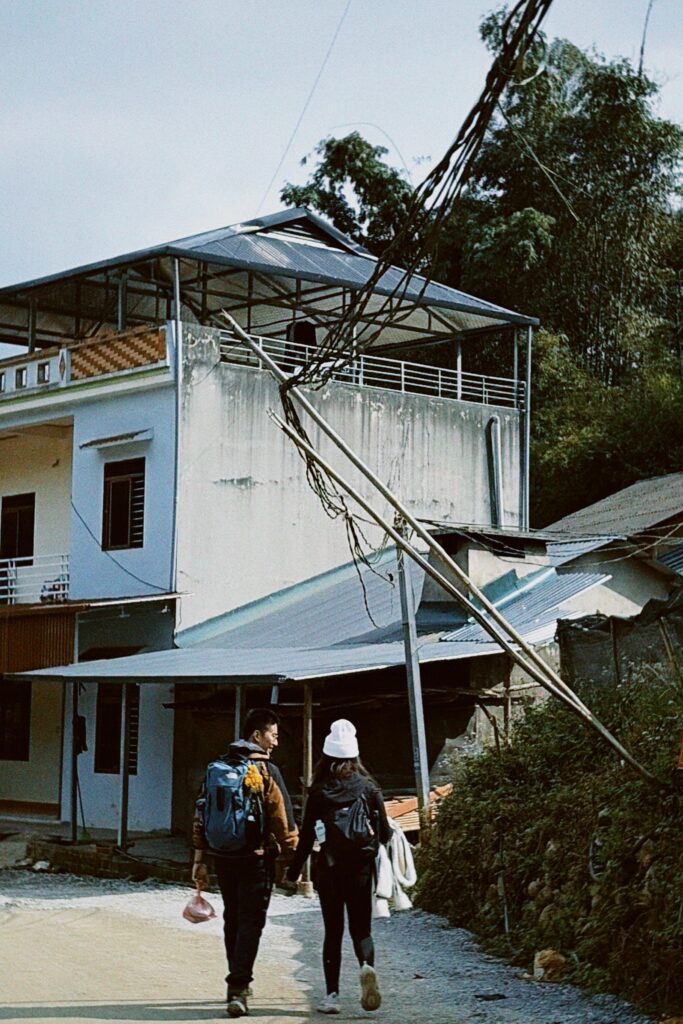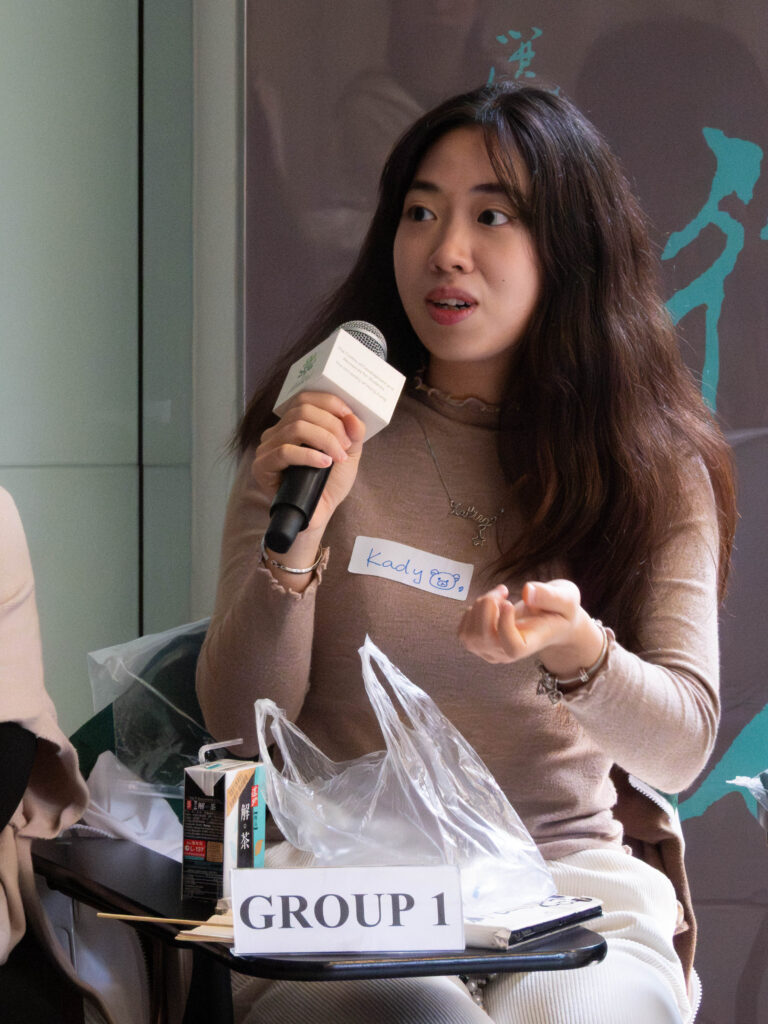
As a final-year social science student who is about to graduate, the seven-day cultural inclusion and physical and mental health study tour in Vietnam is not only a rare practical testimony in my academic career, but also an unforgettable growth journey. During this journey, I bravely tried many new challenges, met countless warm and interesting people, and was deeply immersed in the unique charm of Vietnamese culture, I also have a deeper understanding of the relationship between China and Vietnam, and every experience has made me full of rewards, and it has become a precious memory of the transition stage of academic and life.
“Every moment in Vietnam is unexpected to me.” During the journey, the collision of new experiences and friendship has filled us with surprises every moment. We have the opportunity to visit local farmland to select fresh ingredients, and learn to make Vietnamese spring rolls in the kitchen, and listen to the owners share the wisdom of life behind their diets. Furthermore ,the college students talked about their studies, dreams and the common topics of young people in the two countries, and learn from them the real Vietnamese campus life and social development, especially the Hanoikids students will take advantage of their free time and lead us to find food in the streets and alleys of Hanoi in a voluntary nature, only to meet friends of different nationalities and practice their English ability.
In addition, it is our honour to visit the Chinese embassy in Vietnam and communicate with diplomats, therefore ,we can also have a clearer understanding of the profound historical and cultural origins and cultural origins of China and Vietnam. Meanwhile,in the society of Vietnam, China’s cultural influence is also very large,including that they can learn Chinese and dedicated To Confucius’s Temple ofLiterature. The current practical cooperation has understood the practical significance of mutual support and common development between neighboring countries under the”Belt and Road” initiative, which also enriches the international perspective of oursocial science discipline.
On the other hand , I am deeply immersed in Vietnamese culture: On the first day of the trip, I draw the Vietnamese conical hat (nón lá) that symbolizes the local wisdom, and also invited the students of FTU to leave warm blessings and messages for my thumb, to feel the traditional handicrafts and the temperature of people; and we have the opportunity to taste various authentic food every day, not only from the streets of Hanoi, but also the farmhouse dishes in the Sapa Mountains, each flavor carries the local area of Vietnamese cuisine practices that we can relive in life in the future. These experiences make me understand that cultural tolerance is not only about respecting differences, but also taking the initiative to enter and real feelings, and the balance of physical and mental health is the basis for dealing with all challenges, all coincide with the concept of cultural care and physical and mental development.
Last but not least , I would like to express my sincere thanks to all the people who participated in this journey. Thanks to the staff of Cedars for their professional arrangements and careful care, so that we can experience and learn to the fullest on the premise of safety; thanks to my group mates for their companionship, tolerance and encouragement , to make the journey full of warmth and laughter; I would also like to thank the local volunteers, community residents, university students and children in Vietnam. It is they who share life and culture without reservation, and I have gained the most real emotion and gratitude.
This trip to North Vietnam is an important practice in my social science study, and it is also a valuable classroom in life. It has made me more tolerant, persevering and flexible in the process of trying new challenges and meeting new friends, and has also strengthened my original intention to use social science knowledge to focus on reality and serve others, but also not forgetting the importance of maintaining my physical and mental wellbeing. I believe that this unforgettable memory and profound enlightenment will accompany me through the graduation season and continue to move forward on the road of life in the future.
Kady Wong
BSocSc Year 4
Group 1 Leader
I am truly thankful to be in the Northern Vietnam Study Tour, it was indeed not only a tour for cultural exchange but also let me know more about myself and appreciate nature more. To be honest, before the arrival I was worried about the environment in Vietnam that I might not be familiar with. Yet, with the companionship of peers we were able to survive till the end! I would say this tour is full of challenges and many ‘firsts’ in my life, that’s also the reason why it makes this tour unforgettable and full of meaning to me.
Throughout this trip, I can tell there is really some transformation within myself. I turned from being scared to slowly enjoying and eventually taking the initiative to discover the beauty in Vietnam. I still remember clearly the first time we got off the tour bus and visited the Ho Chi Minh Mausoleum, the tour guide brought us to cross the road with NO traffic light at all. At that moment I was totally shocked and held my groupmate’s hand tightly, as we were both worried about our safety. I couldn’t imagine how I was going to survive a whole week with such poor traffic management. But then we quickly got to be welcomed by the lovely local university students and Hanoikids to let us slowly immerse ourselves in the Vietnamese culture. I started to put down my worries and stereotypes and found that Vietnamese people were actually much kinder than I imagined. They were so willing to answer our questions and chit-chat with us. They were also very considerate in that they kept asking if we were tired as we arrived in the early morning on day 1. I was touched by them and began to view Vietnam from another perspective.
Yet, things do not always go as planned. During the second day of our trip, we encountered many uncertainties in the volunteer teaching. However, since many of our activities were cancelled, we got more free time to walk around the city instead. This is also the first time I walk alone and experience the culture there. I randomly walked into a cafe and enjoyed my me-time while also observing the lifestyle of the Vietnamese. I really like the way that the local people know very well how to relax with a cup of coffee and just sit there and do nothing. Unlike Hong Kong people, we always strive for achievements and living a fast-paced life without a balance between work and life. I was influenced by the chill Vietnam culture and started to reflect on my own lifestyle. I hope I can experience life slowly as they do! With that, I tried to put down my ego and fully enjoy the rest of the trip to discover more internally and externally. That also comes to the highlight of the trip which I keep on challenging myself to try out something new! It was my first time to go kayaking and climb up to a 3143-meter-high mountain. Despite I was also concerned and thought of giving up in the middle, I did not. I still tried my very best to accomplish the challenges because I don’t want to leave any regrets. The moment I reached the summit of Mount Fansipan, I really breathed a sigh of relief. I am truly thankful for myself that I did not give up. The view at the top of the mountain is undoubtedly worth seeing, and I will never forget it.
The days in Sapa were so unforgettable for me that they made me feel the warmth of human connection. From seeing the sweet little girl selling sausage to me, the passion from a convenience store cashier that welcomed me with greetings and smiles to the heartwarming locals that I met along the way when I had a night walk. Thank you for letting me know that Vietnam is a place filled with love. I am grateful for every encounter in my journey. Not to mention the natural beauty in the villages like the astonishing terraced fields. Standing in the middle of the field made me realize how tiny I am as a human being. I feel like all my concerns are insignificant. I really appreciate the rustic village lifestyle that inspired me to find back the balance in my own life.
Nevertheless, this trip is full of many once-in-a-lifetime experiences that are certainly memorable for me. I am glad that I stepped out of my comfort zone to try, experience, and grow. Thank you for everything, and I hope that through these experiences I can be more fearless to embrace the challenges ahead.
Reacker Lo
BSc(MAT) Year 4
Group 1
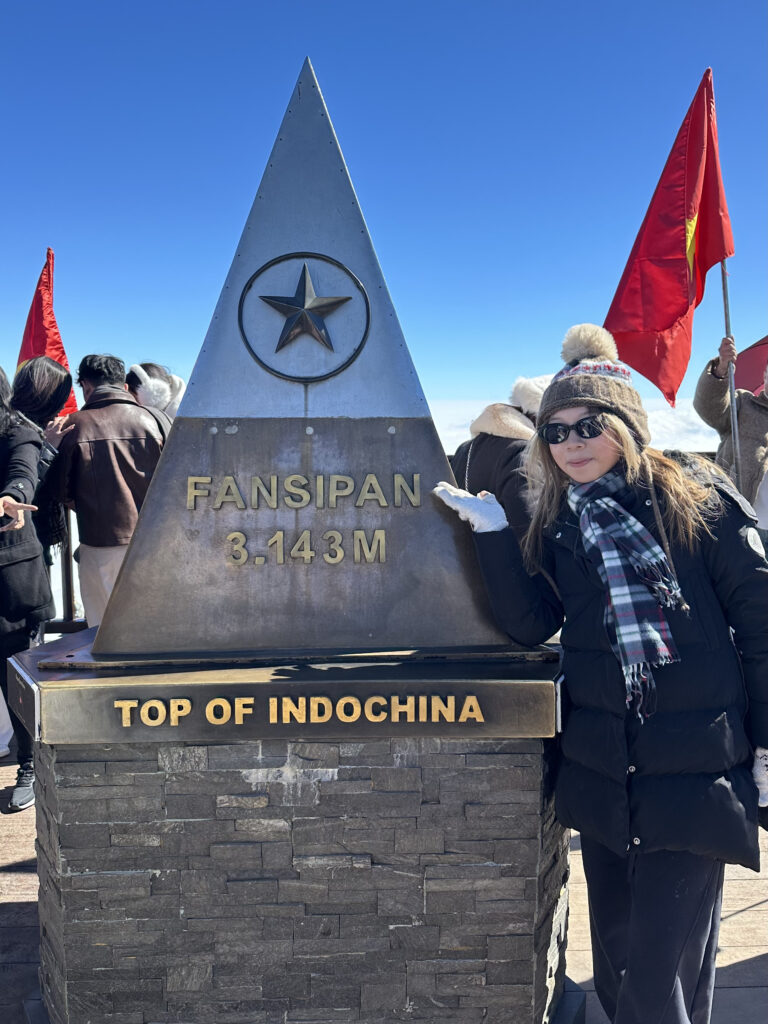
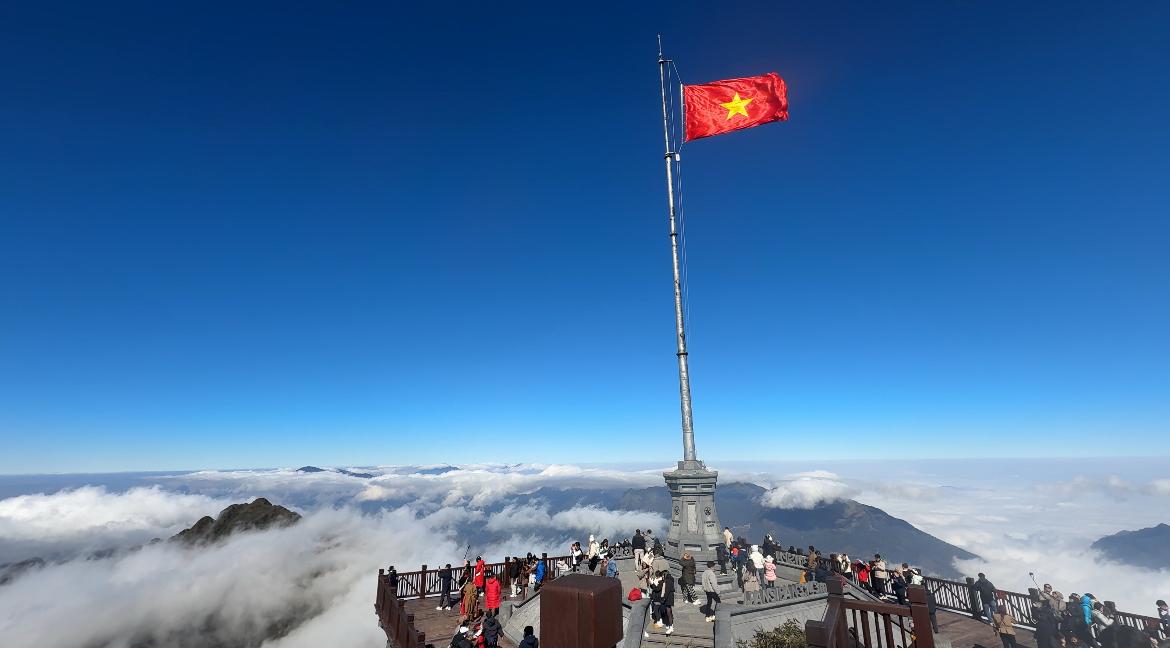
This trip to Vietnam really helped me grow tremendously. Through this trip to Vietnam, I learned so much about Vietnamese culture and history, while I also discovered valuable knowledge about physical and mental well-being. For example, how to take care of my spirit and attitude in new environments. As an engineering student (with a minor in philosophy), I tend to address issues with a problem-solving mindset. This journey made me realize that growth can also come from interacting with other people. For instance, it can happen by slowing down, observing the things around you, and building genuine connections with others.
1) What I learned about wellness
One of my most unforgettable memories is reaching the summit of Fansipan . I foundreaching the summit highly meaningful, not only because it ranks as Vietnam’s highest peak, but also because it allowed me to gain a completely new perspective.When I stand at the highest point and enjoy the view of the mountains and the sky, I feel peaceful and refreshed. I don’t need to rush to climb mountains anymore, and I don’t need to check my phone to kill time. I just stood there. That moment made me experience a simple kind of happiness: living in the present.Halong Bay gave me a similar feeling. On the boat, I felt my thoughts calm down. I could focus on enjoying the landscape and not think about anything. I’m starting to realize that wellness isn’t always about what you do. Sometimes, doing nothing and focusing on the present sensory experience can also benefit our health—such as giving ourselves space to rest. This allows me to completely enjoy traveling without treating it like a to-do list.
2) The most meaningful exchange with local people
For me, the most meaningful cultural exchange was visiting the Foreign Trade University (FTU) to make Vietnamese conical hats. This process is really fun and challenging. Talking with Vietnamese students is also very meaningful. Although our language skills in English are both limited, we still try our best to communicate and express our meanings. We communicated through simple English words and body gestures which is enough for understanding each others’ meaning. I realized that cross-cultural communication isn’t about language fluency, but about respect and willinging to talk. After I stopped being afraid of my language abilities, I became more open. This openness allowed me to talk with different people during this trip which helped me learn a lot of new things about Vietnam.
3) Challenges and how I overcame them
My primary challenge is language. Secondly, I sometimes don’t understand local
cultural customs. At first, I was afraid of making mistakes or being rude. Sometimes I didn’t know the best way to respond and start conversations.
I overcame this challenge through the following three approaches:
1. I actively engaged with locals, regardless of the length of our interactions.
2. When I saw unfamiliar concepts, I sought assistance from peers and tour guides.
3. I researched some information before going to the destinations.
Instead of avoiding this issue, I was happy to view it as part of my learning journey.
4) How I changed (personal growth)
Through this trip, my communication skills and ability to see things from others’ perspectives have improved, which has boosted my emotional intelligence. Furthermore, I’ve learned to observe different aspects of myself more deeply. I understood everyone has their own characters, this could be a good thing to happen.
So I learn to accept my unique characteristics with greater tolerance. My greatest takeaway was stepping out of my comfort zone, which helped me grow in many moments. In addition, this trip has inspired me to be more active in trying new things and meeting different people in the future. Finally, I want to thank everyone on this trip. I am happy with all of you on this trip because you guys supported and accepted me a lot which made it easier for me to learn, adapt and enjoy the journey.
Daniel Tsang
Bachelor of Engineering in Electrical Engineering Year 2
Group 1
This programme has given me a chance to step out of my comfort zone, create new memories, and meet many new people. In the beginning, I was very excited but also a bit afraid of this new experience because none of my friends went with me. I was not sure if I could make new friends and be happy on this one-week trip to another country where everything was so new to me.
However, what I gained from this seven-day trip was more than I expected. I made lots of new friends, shared laughter, and created new experiences and memories. I formed a very good friendship with my roommate and all my other teammates. Moreover, the conversations with local people helped me learn more about Vietnam and their lives, and also made me reflect on my own life.
I learned more about the culture of Vietnam through immersive experiences like food tours with local students, trekking in Lao Chai, and having free time to explore the city. While chatting with the university students who brought us around for food tours, I felt their hospitality and friendliness. In our conversations, I learned that they actually do the tours for free just to meet new people from around the world. One of them could speak very fluent Chinese yet had never been to China before. This made me think about how lucky I am to be in such an international place like Hong Kong and made me reflect on how I have always taken this for granted and did not try to explore more of other places by getting to know more friends from other countries. The Honoikids taught me that we can explore the world not only by traveling but also through conversations with people around the world.
Moreover, I also learned from them that helping others or doing volunteer work is not just about giving; in the process, we also receive something, whether it’s the love from the people we help or a chance to explore our vision of life through interactions with others.
While trekking in Lao Chai Sapa, I chatted with a member of an ethnic minority. She is 21 years old, the same age as me, but she already has four kids and was carrying one baby. Although I was pretty shocked, I knew that this was their way of life. Throughout the trek, they kept following us, giving us little handmade presents that they folded from leaves into heart shapes. That’s amazing craftsmanship, and I think they should sell those instead of other products! At last, while we were leaving, they kept trying to sell us their products.
Although some people kept telling me they were just emotionally manipulating me and that those were tourist traps, I felt that they were actually living difficult lives. Many women in the village are taking care of their children, and this is how they support their families. There were even many little kids outside trying to sell things. I think if they were really living a good life, parents wouldn’t ask their kids to come out to work. Even though that’s normal for them, I still want to support them and express my thanks by buying their products, which cost me very little. This experience allowed me to connect with and learn more about the lives of ethnic minorities in Vietnam.
Moreover, this experience also made me reflect on the importance of education. While we were trekking, we met several kids heading home after school. The kids didn’t have school bags and carried their books by hand. The materials they learned were actually pretty advanced, and most of them could speak English. When we were eating in a local restaurant, the owner also told his child to speak with us, and his child could speak good English and Chinese. I anticipate seeing the changes in Vietnam in the future as this new generation, equipped with a good education, grows up and transforms their lives.
We also had the chance to participate in volunteer work with the kids. Though we only had one day of volunteer work, this was my first time working and organizing activities for children with SEN. This experience helped me extend my knowledge from semester one about children with SEN. I realized that no matter how much knowledge I have, I might still not know how to handle them in real situations because things are more complicated, and the kids might not behave as expected. There’s still a lot of work and reflection to be done in order to equip myself and apply what I’ve learned in an educational setting to help more people in need. Moreover, this activity also made me reflect on what true education should be. In that context, we might not be able to teach them much due to language barriers. But through our interactions, we showed them our love and that their needs are seen and valued by us, which really teaches them what it means to be human. I think the best educators help their students know their value and motivate them to live unique lives. This first experience working with students with SEN, although chaotic, made me realize the sparks in every person and how educators should help ignite that spark.
Lastly, the programme allowed me to immerse myself in the beauty of Vietnam through many outdoor activities like trekking and kayaking. I anticipated these activities a lot since I seldom do them in Hong Kong but have always wanted to try. Kayaking in Halong Bay, lying on the boat, viewing the magnificent mountains and natural wonders, brought me a sense of tranquility, peace, and happiness. Hiking and walking while viewing the rice terraces made me fall in love with hiking, as I realized I really enjoy experiencing nature while getting fit. This trip truly ignited my love for nature and outdoor activities, leading me to go on a hike at the Peak and Tai Tam Chung after returning to Hong Kong.
During this trip, I had lots of fun trying new activities with new people I had just befriended. This made me realize that initially, I had lots of fears and worries about the unforeseeable future. All those fears might have been imaginary. However, this time, I realized that I should not let fear override my courage to try new things and challenge myself. If I hadn’t done so, I wouldn’t have had this wonderful experience in Vietnam. When I stepped out of my comfort zone, a new colorful world was waiting for me. With this in mind, I feel more confident in trying new things in the next semester, whether it’s being more active or attending activities I have never tried before. I definitely gained more confidence in myself after this trip.
A big thanks to all the staff for arranging such an amazing trip for us!
Lina Ying
BEd&BSc (Biological Science) Year 3
Group 1
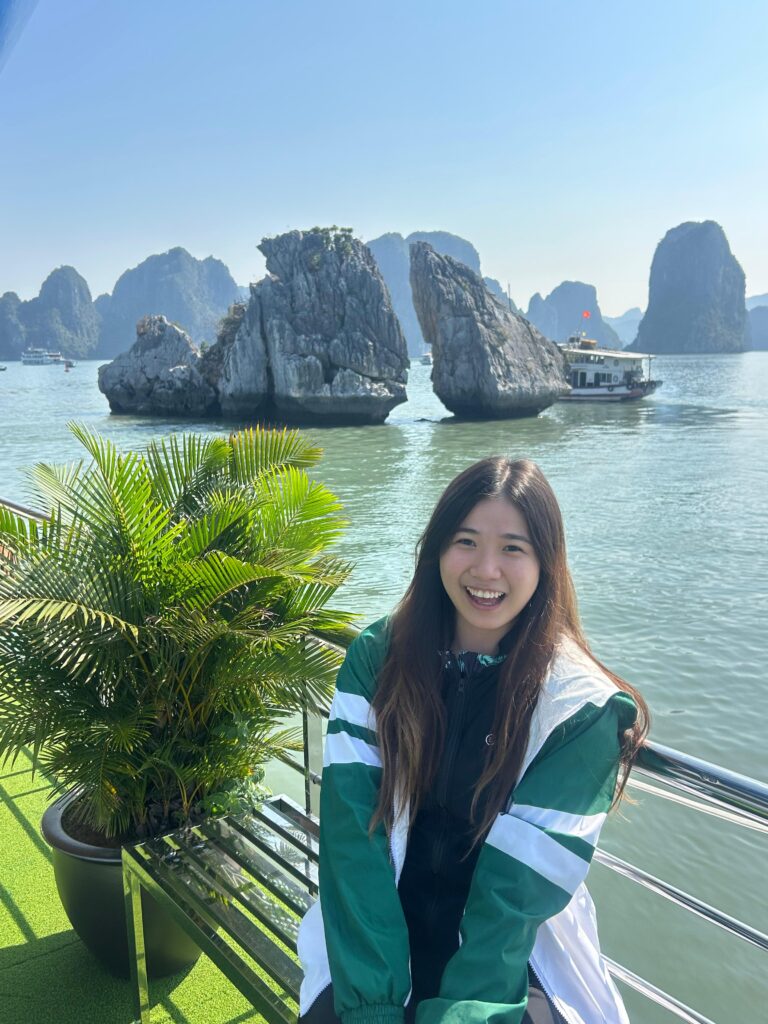
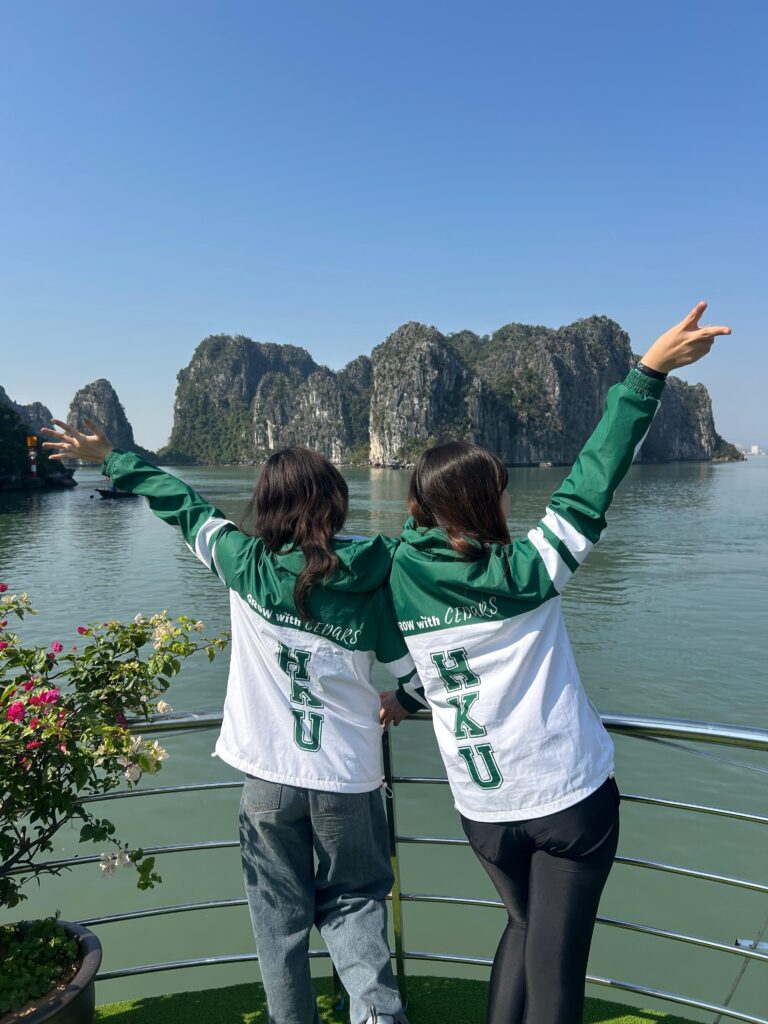
This Vietnam study tour has made an impact on me especially in terms of self-growth. Throughout the trip, I found myself constantly thinking, observing, and questioning things, both about Vietnam and about myself.
One of the most difficult parts of the trip for me was working with special needs children. I have underestimated how difficult it is to manage them. Many of the children in my group didn’t respond to voice or touch, and it was hard to know what they were thinking or feeling, not to mention the language barrier. I often felt unsure of what to do, and it took a lot of patience instead of feeling frustrated or helpless. This experience definitely made me appreciate teachers and volunteers much more. Watching my peers who study education engaging with the children showed me how much effort and care goes into this kind of work, something I had previously taken for granted.
As a humanities student, I naturally paid a lot of attention to local life and everyday details. During the trekking activities, one thing that stood out to me was that there were almost no men in the villages. Instead, it was mostly women and young girls following us, asking us to buy their souvenirs and chatting with us. Many of the items looked machine-made, and every store sold almost the same thing, while they claimed to be handmade. This made me reflect on gender roles, labour, and how tourism and government policies shape people’s lives in ways.
Tourism itself became something I thought about a lot. In places like Cat Cat Village, everything felt staged, and it made me question what authentic culture and diversity actually means. Is culture still authentic if it is performed for tourists? Or is authenticity something that changes as societies adapt to economic realities? I didn’t come away with a clear answer, but the discomfort I felt made me more interested in researching these issues in the future, especially from a sociological or anthropological perspective.
I also noticed the lack of global chain stores like McDonald’s. After chatting with the guides from Hanoikids, I found out that locals genuinely preferred their own food and food culture, and that salty and savoury dishes from Western chains don’t fit the Vietnamese palate. The way small businesses thrive instead of being monopolised by chains is something that I truly appreciate and hope it stays the same as Vietnam develops as a country.
I also noticed that many tourists were white and from the US or Europe. At a souvenir shop, I even ended up chatting with a German tourist in German, which felt really comforting as someone minoring in German language. This was my first time speaking to a German person besides my German teacher, and it made language learning feel real, as learning languages is all about connecting with people.
One of the best parts of the trip was undoubtedly the group itself. I’m very thankful for my groupmates, as a huge part of my enjoyment came from being with them. When we first met at the pre-trip briefing, everyone seemed quiet and reserved, and I worried we wouldn’t get along. But over time, we stayed together almost all the time, even during non-compulsory meals, and bonded over jokes, gossip and deep talks. I’m especially grateful for my roommate, who I got along with extremely well. Having changed roommates twice at my hall, I realised how rare it is to find someone you truly match with. I also learned a lot from upper year groupmates, from practical advice about university life and exchange, to different perspectives on life and relationships.
Josephine Cheung
BASc(IS), ecology and biodiversity Year 2
Group 1
During the wellbeing trip to Vietnam, I tried many local cuisines, enjoyed stunning scenery, and bought so many souvenirs. The best part of this trip to me was meeting amazing people. They had different energy and personalities, and I felt a special connection with some of them. I really value these human connections. I therefore want to record my thoughts, feelings and what I learned from the people I met. This trip was so special because of the new
friends and learning I gained.
I feel blessed to have met my roommate Kady. She is one of the most powerful and toughest girls I have ever met. She is our group leader, and I know she has done many volunteer works. I think she is very smart and capable. During the trip, and even before sleeping, we talked a lot. She shared how she struggled with low self-esteem and fought it by losing weight, trying new activities, and meeting new people. She told me she used to doubt herself a lot because of her appearance and abilities. However, she worked so hard to change that. She started losing weight and doing different activities to build confidence. Her story shows how strong she is. I also noticed she is not afraid to ask for what she wants. She works hard for her goals and has confidence in obtaining what she wants. This confidence was built because of her continue hard work. I am not the kind of person who usually take the initiative, so I admire her courage and great effort. She has become my new role model. I feel very blessed to have met her and learned from her strength.
I truly appreciate all my group members. Each of them brought different energy and vibes to our group and I learned a lot from everyone during the trip. Josephine is a calm person who does not talk much, but when she shares her thoughts, they are very impressive and inspiring. I remember at the airport, she shared her observation of Vietnam’s ethnic minorities and wondered why only women work in those villages. Her curiosity and unique way of seeing the world show her critical thinking. I enjoyed deep conversations with her about history, society, and politics. I aspire to have such a special perspective on the world. Lina, who is the same age as me, always acts like a cute, carefree little girl. She often has a bright smile on her face. I remember during meals, when other might criticize the food, she happily says she loves it and always feels grateful. Her cheerful attitude and positive energy made our group feel happier. Since I am not someone who talks or smiles often, I will remember how her smiles and carefree spirit can lift people’s moods. I hope one day I can also bring that kind of joy to others. Reacker is a very energetic girl. She laughs a lot and actively talks with people from different groups. I can see her full of enthusiasm. As a year one student, she is very responsible as our videographer. While everyone was enjoying the time, whether it was during Vietnamese activities, cooking, or sightseeing, she always remembered to capture those moments for the team. I really admire her responsiveness and caring attitude. Daniel is the only boy in our group. Even though he does not talk much, he gets along well with everyone. He is gentle and caring, always asking if we need help and offering support for the group. I feel very lucky to have met such wonderful group members. They created a warm and loving atmosphere, and I learned a lot from them.
Besides my group members, I also talked with people form other groups and some from Vietnam. I am glad to have a chance to meet Thomas. I remember one day, Daniel, Thomas and I enjoyed Combo Obama together at the hotel. It is a combo of Vietnam food Obama tried when he visited there. I did not know much about it before, but Thomas was very passionate about Vietnam’s culture, history, and politics. I noticed he cares about many cultures and histories around the world too. He is eager to learn more about the world and how people live in different countries. If he does not understand something or has never heard of it, he quickly searches online. I find this very impressive because I think this is the right way of using the internet. It helps us connect with others and learn more about the world. His curiosity and desire to understand make me feel inspired. I want to learn from him. Moreover, during the trip, I sat with Anna on the bus. We talked about volunteering. I have done a few volunteer trips before, and Anna shared her experience in volunteering in Nepal. She told me experience about facing an earthquake, eating strange food and taking cold shower in winter. Despite these challenges, she found the trip very meaningful because she met great people and was dedicated to help others. I saw happiness on her face when she talked about her trip, and I can feel her love for giving. Her experience resonated with me and encouraged me to keep volunteering internationally, helping people in need around the world.
For people who I met in Vietnam, I can clearly remember an ethnic minority woman in Lao Chai. She was about 25 years old and already a mother of three children. She told me she spends her days making handcrafts form indigo plants and selling them to tourist to financially support her family. Meeting her opened my eyes to how different people survive and create their own lives using the resources around them. They live in harmony with nature, which provides everything they need for living. This experience reminded me of the important relationship humans should have with the natural environment. On the last day, we visited a farm and picked some tomatoes, carrots, and chilies. I ate some tomatoes, and at that moment, I realized how the life of nature transforms into nutrients that sustain our lives. This made me appreciate food and water much more. I no longer take them for granted, and I feel grateful for the natural resources that support us. Meeting ethnic minorities in Vietnam helped me understand that the connection between people and nature is very valuable. We should cherish and protect our relationship with the natural world as it is essential for our survival and well-being.
Yoyo Kwan
BA (Double Majors in Chinese Language and Literature & Counselling) Year 4
Group 1
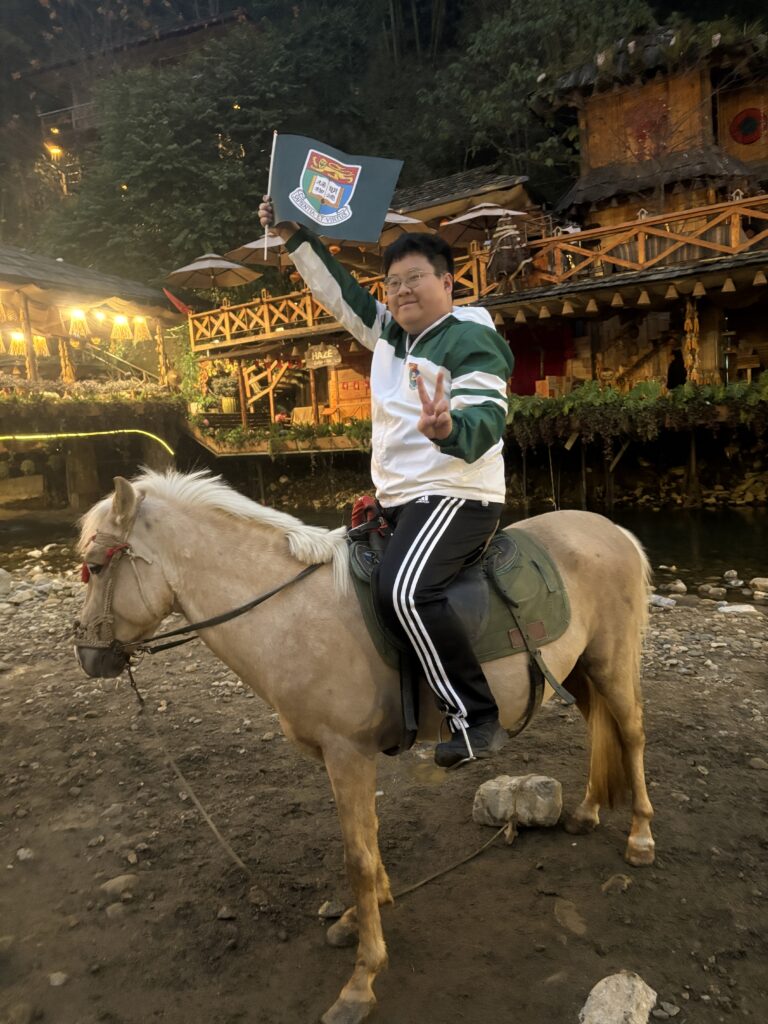
The Northern Vietnam Study Tour (Cultural Inclusion and Wellness) was an immensely enrichingexperience for me. During the journey, I not only learned much about Vietnamese history and culture, but also gained a deeper understanding of the Belt and Road Initiative and its related future career opportunities.At the same time, I immersed myself in Vietnamese culture through local cuisine and so on. Although I encountered some challenges along the trip, each of them was a valuable learning experience to me. I am especially grateful to CEDARS staffs, tour guides, tour leaders and all my fellow peers. Without their efforts and companionship, this journey would not have been so fulfilling.
The first day was quite packed but left the deepest impression on me. After landing, we headed straight to the Ho Chi Minh Mausoleum and Presidential Palace. The architectural style and slogans there was similar to China several decades ago. Later, we visited the Foreign Trade University and exchanged views with local university students about differences and similarities between campus life in Vietnam and Hong Kong. We also made traditional Vietnamese hats together. I tried my best to complete my own hat and inscribed it with a classical Chinese poem by Wang Anshi (王安石), “New Year’s Day(《元日》)”, which represents Chinese culture. I still keep it back in Hong Kong. The teachers and students were exceptionally warm, and I truly hope to have the chance to visit them again. Afterwards, we visited the Chinese Embassy, my first time ever stepping into a foreign embassy. The term “diplomacy” often seems mysterious to Hong Kong students. For me, after previously visiting the Ministry of Foreign Affairs in Beijing, I had gained a basic understanding of diplomatic work. This time, entering an overseas embassy brought me even closer to it. From the diplomat’s introduction, I learned that although Vietnam and other countries along the Belt and Road are still developing, their prospects are very bright. Given the saturated job market in Hong Kong, pursuing opportunities in Vietnam could also be a feasible path. The diplomats mentioned that the Vietnamese government has talent recruitment programs offering corresponding safeguards and benefits, and they particularly emphasized the importance of learning Chinese. As a student with a background in Chinese education, I believe Vietnam also needs talent in the education sector, which could be a potential career direction for me. It is fair to say that the embassy visit was the most rewarding part of that day. Finally, guided by Hanoi Kids volunteers, we tried authentic Vietnamese street food. Their enthusiastic explanations and guidance around food spots were deeply appreciated. Although some fried foods later made me feel a bit unwell, it was still worth it because the flavors were truly delightful. My favorite was the duck dishes, including fried duck and duck soup, which reminded me of Nanjing’s duck blood and vermicelli soup. What touched me most was that at the end of the tour, the volunteers even queued up to buy us tofu and grilled cakes. Their hospitality moved me deeply and made me reluctant to leave.
The second day focused mainly on volunteer teaching, which was the activity most closely related to my major. We faced some challenges during the session, such as teaching a different group than originally planned and a shortage of tables and chairs. However, thanks to my teammates’ quick adaptability, the event proceeded smoothly. I was responsible for teaching the Chinese calligraphy part and tried to introduce Chinese traditional culture and Spring Festival customs to the participants. Among the learners were children with Down syndrome, some of whom were hearing impaired and required sign language communication. Though they could not express themselves verbally, I could sense their joy through their facial expressions. Additionally, I explained to foreign volunteers and local participants the auspicious meanings of four character idioms such as “Five blessings arrive at the door (五福臨門)” and “Good luck and happiness (吉祥如意)”, Spring Festival customs like the upside down the “福” character, and the stroke order in calligraphy. Since the foreign volunteers had strong comprehension skills, the teaching outcome generally met my expectations. This experience provided useful inspiration for my upcoming placement in primary and secondary school, teaching me how to adapt to unexpected situations while ensuring teaching objectives are met. After the volunteer teaching session, we visit to the Train Street. Standing in the front row, I felt the thrill of the train rushing past so close, a sensation I had never experienced before. Train street is especially lively at night, with lights making it perfect for photos. The street scenery and atmosphere reminded me of Jiufen and Shifen in Taiwan, though it felt even more bustling and noisy here.
On the third day, we toured to Ha Long Bay. The scenery was absolutely stunning, and photos taken on the boat turned out beautifully, worthy of its title as a UNESCO World Natural Heritage site. The peculiar rock formations along the way reminded me of the landscapes in Guilin, China. As the saying goes, “Guilin’s scenery tops the world.(桂林山水甲天下)” Although I have never been to Guilin, I experienced similar beauty a Ha Long Bay, known as “Guilin on the sea.” This sparked an urge in me to visit Guilin in Guangxi someday to compare the two. During the water activities, I was a little scared because I had capsized while kayaking before, so I chose the safer bamboo raft. This allowed me to leisurely enjoy the views and take photos. As the boatman showed us around the bay, watching other students paddle hard while we relaxed on the raft felt quite amusing. Later, we explored a limestone cave. The stalactites inside the cave were rugged and magnificent, making it feel like a fantasy world. With the guide’s explanation, we identified various uniquely shaped rocks, and I took many photos inside the cave.
On the fourth day, we go to Sapa. On the way, we passed the Hekou border crossing between China and Vietnam. Seeing the Chinese national emblem and the bridge, I was surprisingly overwhelmed with a sense of homesickness, even though I had only been abroad for a few days. It made me imagine how deeply moved Chinese people living overseas for years must feel when they see the national emblem. We joked about being ready to head straight back with our Home Return Permits and passports. After taking photos at the border, we reluctantly moved on. Next, we visited the Cat Cat Village. At first, I thought the village would be full of cats, but after explanations from the tour guide and our Vietnamese peer Luna, I realized it was a phonetic translation in Vietnamese and not literally about cats. The village had many Hmong residents dressed in traditional clothing, which reminded me of my hometown, Guizhou. The scenery and Hmong costumes in the village were very similar to those in my hometown, reflecting the profound influence of Han culture on Vietnam. I joined in ethnic dances, horseback photo sessions, and watched cultural performances, all in a lively atmosphere. However, Luna pointed out that Cat Cat Village had changed significantly compared to previous years, becoming increasingly commercialized and gradually losing its original cultural essence. I quite agreed with this point. While tourism development can bring income and employment opportunities, the abundance of shops and tourists can also diminish the appeal of cultural sites. But still, allowing more people to learn about these village cultures has its positive significance.
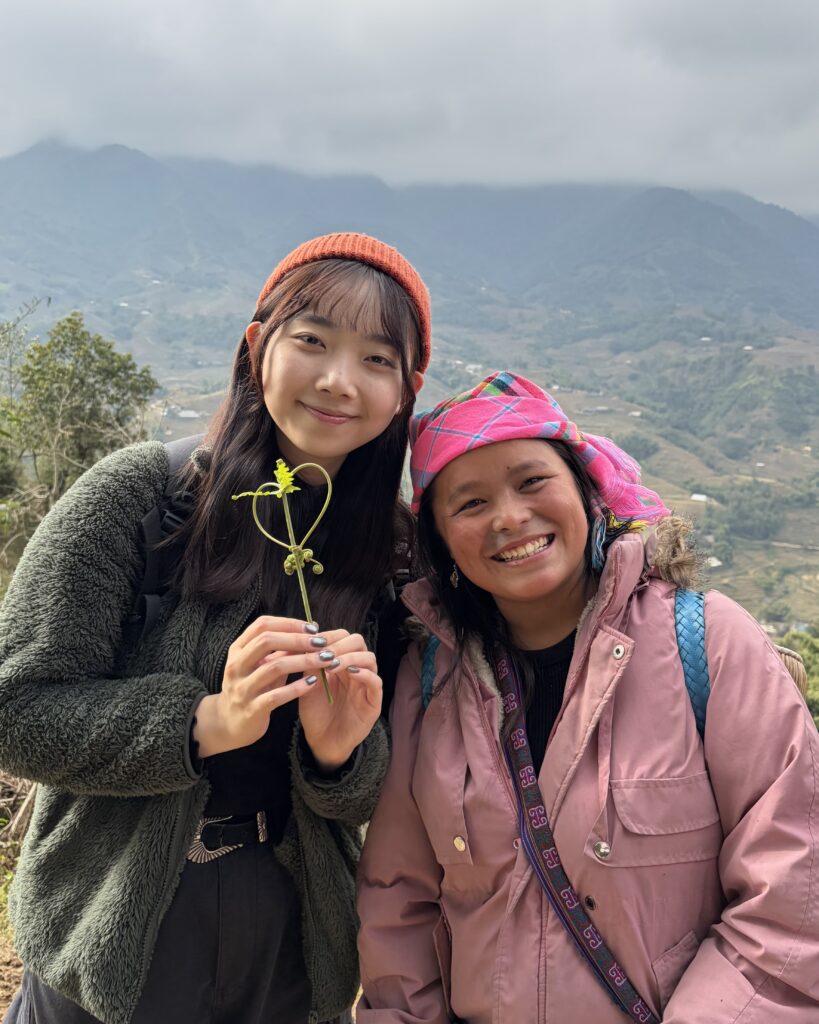
The fifth day was the one I had been most worried about initially, because it involved a long trek. I felt anxious before setting out, but actually walking the path made time pass quickly, and the mountain trail was not as rugged as I had imagined. Local villagers accompanied us along the way. At first, I thought they were simply being hospitable. One villager even went up the mountain to pick fresh leaves and weave a “magic wand” for me, which truly touched me. Later, I realized they were also hoping to sell local products. Out of gratitude, I ended up buying some items. Through conversations with the villagers, I also broke some stereotypes about Vietnamese ethnic minorities. They mentioned that arranged marriages or bride kidnapping customs no longer exist, and relationships are relatively free nowadays. However, they marry quite early, often having children in their twenties. This made me reflect on the hardships in their lives.
Though we are around the same age, they are already raising children, becoming selfless mothers who may spend their entire lives dedicated to their families in these villages, supporting their households. Later, I learned that the income from selling these products might support them for months, and the same items are sold at higher prices in cities. I somewhat regretted not buying more to help them. Whenever I think of this, I feel quite upset. During the trek, we were warmly treated to authentic Vietnamese farmhouse meals. The carrots and vegetables were especially amazing, fresh and naturally sweet, something hard to find in cities. This reminded me of the famous line from the documentary “A Bite of China(《舌尖上的中國》)”: “The best ingredients require only simple cooking.(高端的食材往往只需要最樸素的烹飪方式)” We continued hiking and enjoyed the beautiful terraced fields. The entire walk lasted about five to six hours, but I did not feel particularly tired, which was quite different from what I had imagined. This trek allowed me to experience local food and village culture firsthand. Though demanding, it was truly worthwhile.
On the sixth day, we headed to the highest peak in Vietnam, which is Fansipan for sightseeing. It is about 3,143 meters above sea level and is known as the “Roof of Indochina”. Early in the morning, the fog was thick, but it soon cleared, revealing magnificent mountain views. Standing on the mountainside and looking down, I sensed the feeling described in the lines by Dufu (杜甫) and Sushi (素食), “I will ascend the mountain’s crest, it dwarfs all peaks under my feet (會當凌絕頂,一覽眾山小)” and also “Viewed from the front, a mountain range, from the side, a single peak.(橫看成嶺側成峰,遠近高低各不同)” The temperature on the mountain was very low, and even I, who am not usually afraid of the cold, put on a jacket. Due to limited physical strength, we chose not to hike to the summit, which was a real pity. However, we thoroughly enjoyed taking photos along the way, and looking back at those pictures, they are really very beautiful. Although there was some regret, I believe regret is also part of any journey. As CEDARS staff Mr. Oscar often mentions, the imperfection of “wabi-sabi (わびさび)” can make memories even more profound. On the seventh day, we first visited a Hanoi farm in the morning to harvest vegetables. Although this wasn’t my first time harvesting vegetables, it was still a special experience for me. I felt a great sense of accomplishment harvesting plump tomatoes, vegetables, and onions myself. The tomatoes on the farm had no pesticide residue. I tasted one, and it was fresh, sweet, and juicy, completely different from the ones I buy in the city. Even I, who don’t usually like tomatoes, started to enjoy them. This made me look forward to the cooking class that followed. In the cooking class, most ingredients were already prepared, and we mainly handled the final steps. I was responsible for stir frying meat and pan frying meat patties. Many peers came to taste them, and in the end, I only got to eat a few pieces myself, which was a bit unfortunate. We also made fried spring rolls and cooked winter melon soup. While the soup tasted ordinary, the winter melon itself was very fresh and sweet, again highlighting the advantage of organic ingredients. In the afternoon, we visited the Temple of Literature in Hanoi. Coincidentally, a group of junior secondary school graduates were shooting their graduation photos there, reminding me of my own youthful secondary school days. Many plaques in the temple are inscribed with Chinese characters, as well as inscriptions related to academic achievements. The overall layout reminded me of the Nanjing Confucius Temple I visited last year. This once again confirms the profound influence of Han culture on Vietnam. Through these buildings, I gained a deeper understanding of Vietnamese history and observed an interesting fusion of cultures.
The seven day journey passed in the blink of an eye. For me, it was a precious and unparalleled experience. My greatest growth was stepping out of my comfort zone and trying things I previously dared not do, especially the long trek. The consecutive days of exercise even helped me lose some weight after returning to Hong Kong, and my students said I looked more energetic. This trip also completely changed my impression of Vietnam. Before departure, I had concerns about safety, but the actual experience showed that public order is good, and I encountered no robbery or scams. Vietnam’s development stage reminded me of China decades ago, full of potential. As the embassy diplomat said, Vietnam’s future development prospects are broad, and it might reach considerable scale in a few decades. If I weren’t traveling in a group, I probably wouldn’t dare to go to Vietnam alone. Although there were difficulties along the way, with the help of CEDARS staffs, tour guides, tour leaders and my fellow peers, we overcame them one by one. All in all, I am very satisfied with this trip, as each day was rewarding. I thank all group members and organizers for creating such wonderful memories together.
Oscar Zhang
BA&BEd(LangEd)-Chin Year 3
Group 2 Leader
When I told my friends that I would go back to Vietnam for a study tour, they all had the same reaction: “Why? You are already a Vietnamese!” But for me, a place is never just interesting by itself; it is made meaningful by the people you share it with. I wanted to experience Vietnam again as a foreigner would, open to surprises, and maybe even stumble upon things I had overlooked in the 18 years I had spent growing up here.
One of my biggest personal challenges was shaking off the feeling of “I know this all too well.” Standing in the middle of Ba Dinh Square, listening to our guide explain Vietnamese history in English to our international group, was both dramatically hilarious and surprisingly moving. Here I was, a local, relearning the story of my own country through a foreign language, surrounded by friends who were hearing it for the first time. Their curiosity allowed me to view these familiar symbols through a new lens. It became one of my core memories from the tour. “Have you ever been to Hanoi, Halong Bay, and Sapa before, Luna?” Yes, I have been to all of them, and Hanoi is even the city where I grew up. But this time was profoundly different. I was not just revisiting places; I was revisiting them with new friends and new expectations.
The truth is, this study tour was full of firsts for me. There was my first Railway Café in Hanoi, which is a unique thrill I had somehow always missed. There was also my first long trek to Ta Van Village, simply to relax amidst nature. And then, there was the physical triumph of my first real climb toward the peak of Fansipan, not just taking the cable. At that moment, I did not just see the mountain and the sky with its streaks of clouds, but felt it all.
But most notably, there was Halong Bay. The highlight, without question, was my first time kayaking. I have seen those emerald waters and limestone pillars from cruise decks, but being down in the water, at its level, changed everything. I love touching the cool water, love looking straight up at these massive green mountains from way down below, and love basking in the warm golden sunlight. In that moment, it was not simply about admiring a beautiful place. It was like I was a part of it, completely wrapped up in the stillness and peace. I do not think I will ever forget that feeling. It was simple, but it was everything.
Another interesting experience in this trip was the informal role I found myself in, a trainee tour guide and translator. With the advantages of being local, I could use my own knowledge to explain a custom or a dish, which filled me with quite a pride. In those moments, I was not just a student on tour; I felt like I had become a bridge, helping others connect more meaningfully to a place I call home.
In the end, this study tour taught me that I can always come home again, but only if I am willing to arrive as a different person. Being a “local” does not mean I know everything; sometimes, it just means I have the privilege of rediscovering my own home with a deeper layer of understanding. For me, I did not just revisit Vietnam; I truly experienced it.
Luna Nguyen
BEng(Biomedical Engineering) Year 2
Group 2
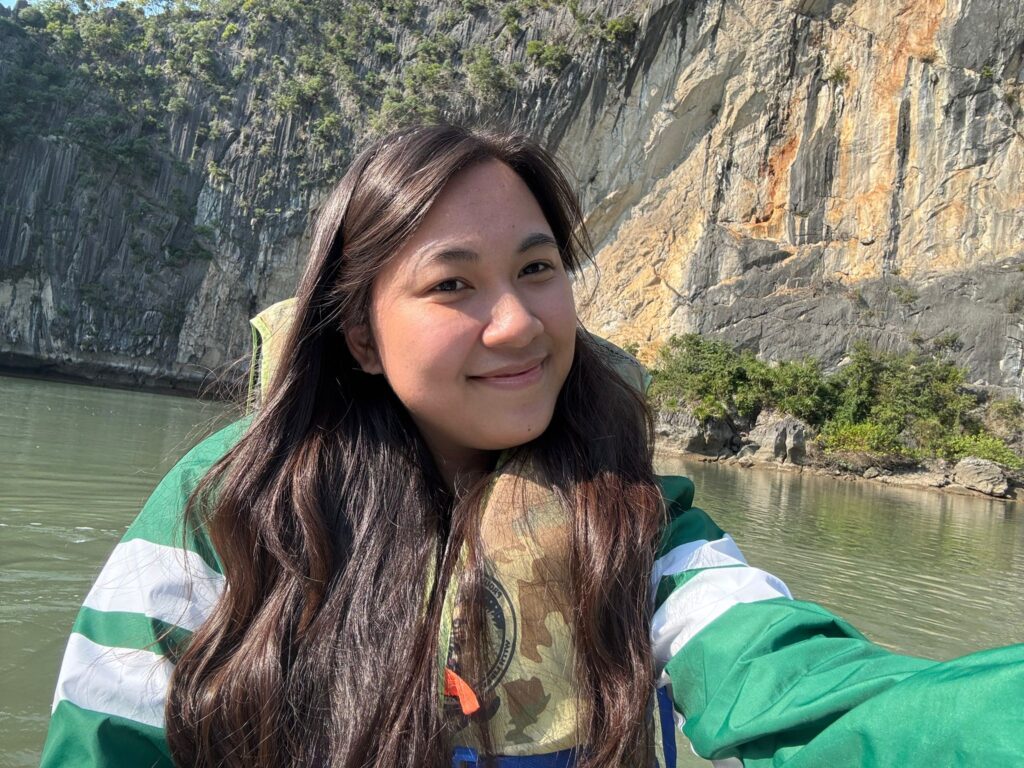
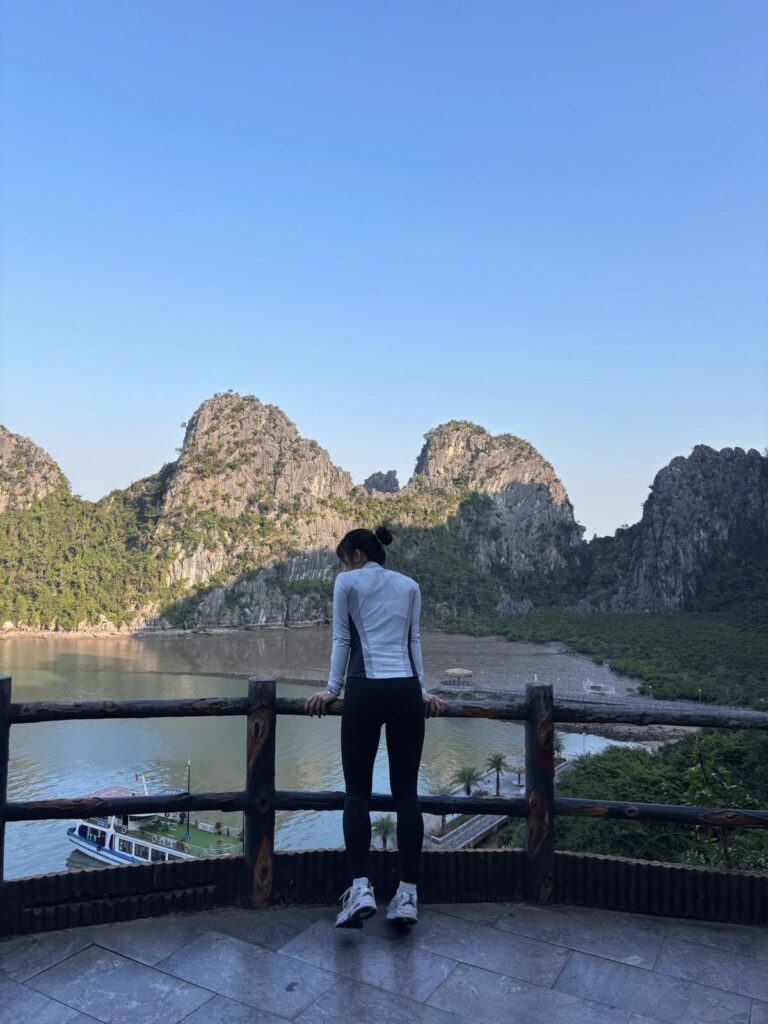
Standing at the departure gate of Noi Bai International Airport on the final day of the tour, we gathered for one final group photo. The golden sunset light reflected softly on my everyone’s faces, blended with laughter, chatter, and the faint tiredness after a long yet fulfilling week. At that moment, I realized how quickly time flies, yet it always leaves its shadow behind in the form of memories: from the bustling street in Hanoi, the misty mountains of Sapa, the stillness of Ha Long Bay, and the long trek through Lao Chai and Ta Van etc, they replayed vividly in my mind; the kindness and curiosity of ethnic minority villagers towards us during the long trek to Lao Chai and Ta Van villages are stayed with me the most. This tour did not only introduce me to Vietnam, but it also inspired me to reflect deeply on who I am.
This tour allows me to understand myself better when I realized that I genuinely enjoy challenges and feel motivated in physical, mental and cultural. Whether it was trekking uphill, adjusting to early schedules, or stepping into unfamiliar cultural environments, I found excitement rather than resistance. Moreover, I noticed I have endless curiosity towards everything, from the survival strategies of a single mountain plant to the history hidden in a wooden temple door, to how ethnic minority communities sustain their livelihoods through generations. Vietnam constantly stimulated my curiosity, and I enjoyed observing, questioning, and learning from the smallest details. This journey reminded me that curiosity is not just an interest, but a way of engaging with the world.
Apart from self- understanding, the tour reinforced my daily habits. Throughout the trip, majority of the assembly times were at 8 or 9 a.m., which forced me to confront my long-standing habit of staying up until 4 a.m. as a night person back in Hong Kong. Slowly, waking up early became something I enjoyed, as I got a full day of time ahead and not much time are wasted. I hope to continue adjusting my body clock step by step in Hong Kong. Moreover, being punctual was not just about following schedules, it became a responsibility to the group. I made sure both myself and my teammates arrived early to avoid delays, learning that collective experiences rely on individual discipline.
Nonetheless, maintaining my workout routine was another challenge. Under the circumstance of time and space constraints, my usual gym habits were impossible. Instead, I adapted a mixed approach of swimming in an ice-cold hotel pool at 6 a.m. on the last day, stretching before and after rest, walking or running and stayed active in small ways whenever time allowed. This taught me that wellness is about flexibility, not perfection.
Interpersonally, the biggest challenge was learning patience. I am fast-paced and strong-willed person, while everyone in the group had different rhythms, especially during trekking or group movement. Rather than becoming frustrated, I heard and tried to adapt the idea of “harmony without uniformity.” Inclusion is always more meaningful than exclusion. I found my balance by understanding others better and spending time with like-minded groupmates who shared similar energy. Thanks to them, the trip was filled with laughter, spontaneous adventures, and unforgettable moments.
Am I happy about this trip? Absolutely. My biggest takeaway is the realization that the world is vast, diverse, and deeply worth exploring. Every place has its own beauty, and discovering it requires openness, curiosity, and courage. This tour reaffirmed my lifelong goal, which is to spend my life travelling, learning, and continuously stepping beyond my comfort zone. In a nutshell, I would like to thank my groupmates, facilitators, and everyone who made this journey possible. This was not just a trip, but a meaningful chapter in my personal growth.
Louisa Yin
Bsc (Geography) Year 3
Group 2
Through these seven days in Vietnam, my personal growth and understanding of Vietnamese culture deepened profoundly. Each day unfolded with new encounters, challenges, and reflections that gradually shifted perspectives on self, community, and the wider world. Also, I met many people and created memorable moments that I know will stay with me for the rest of my life.
Visiting places such as Ho Chi Minh Mausoleum, the Embassy of the People’s Republic of China, and the Temple of Literature presented not only historical knowledge about Vietnam and the relationship between Vietnam and China, but also a deeper appreciation of how Vietnamese people remember their leaders, honor education, and preserve cultural values across generations. The most impress me was I witnessed how the Vietnamese had a ceremony in the Temple of Literature to pray for their children to be successful in their learning pathway.
Immersing in Hanoi’s vibrant streets and the historic sites created a strong sense of contrast between past and present. It is lucky to taste local food and chat with the Hanoikids which helped me better understand Vietnam’s food culture as well as the students’ daily lives. I also want to thank my groupmate Luna, she took us to different local restaurants to taste different special local food, which impressed me a lot, as the food flavors are so delicious and made me appreciate how different Vietnamese cuisine is from what I grew up with in Hong Kong.
The days in Halong Bay and Sapa were especially meaningful for me. I had stepped out of my comfort zone to try a lot of things for the first time over these days. As a person who doesn’t know how to swim, I was a little bit nervous about kayaking. When I tried kayaking with Kylie and could finish the whole route without falling into the water, I was so proud of myself and reminded that things that scare you aren’t unbeatable when you work together. After we paddled through the cave and saw those towering limestone cliffs up close, I felt excited and relieved. Also, through hiking the Fansipan Mountain, I really want to thank Oscar and Louisa which take care of me a lot, because when I almost reach the highest point of the mountain, I suddenly felt dizzy, but they immediately help me, after I recovered and wanted to give up, Oscar encouraged me and accompanied me through the last stretch of the mountain. Because of them, I made it to the summit and got to see that incredible view, and I wouldn’t have believed I could finish the trail, so I really wanted to thank them.
As a future educator in early childhood education, I’m really happy that I could apply what I’ve learned at school to support children or even adults with special needs in Vietnam. Although some activities did not go as smoothly as we expected, and the language barrier made things harder at times, our group and the other groups tried our best to share our Chinese culture to those participants. Everyone tried their best to share our unique Chinese culture with the participants. Also, put in a lot of effort to help them understand what we were trying to teach, using simple games, gestures, pictures, and patience. Seeing the participants become engaged, hearing the room fill with laughter, and watching small breakthroughs happen gave me a deep sense of satisfaction. Those moments reminded me why I want to keep doing volunteer work. The experience also taught me practical lessons about flexibility and creativity, which will help me to become a better educator.
Looking back, these seven days were not just a series of activities, but a continuous process of learning to step out of the comfort zone, to appreciate other countries’ history and culture, and to reflect on my teaching skills. These memories and moments have become an important part of my personal experience that will continue to influence my life.
Ivy Lau
BEd (Early Childhood Education & Special Education) Year 3
Group 2
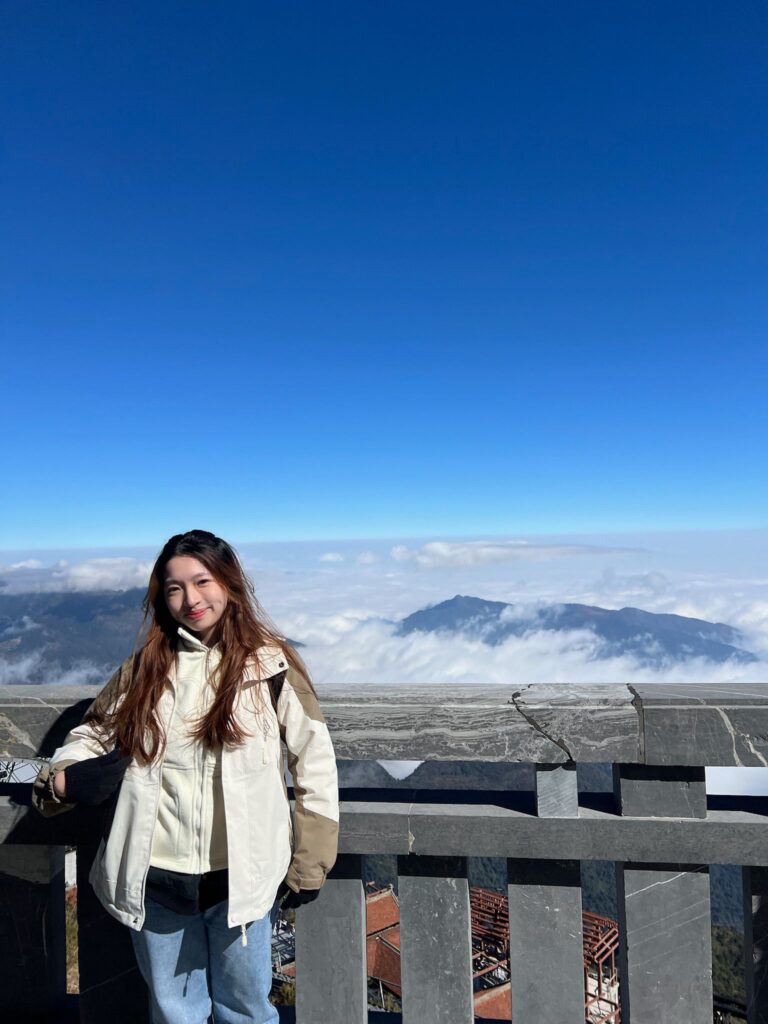
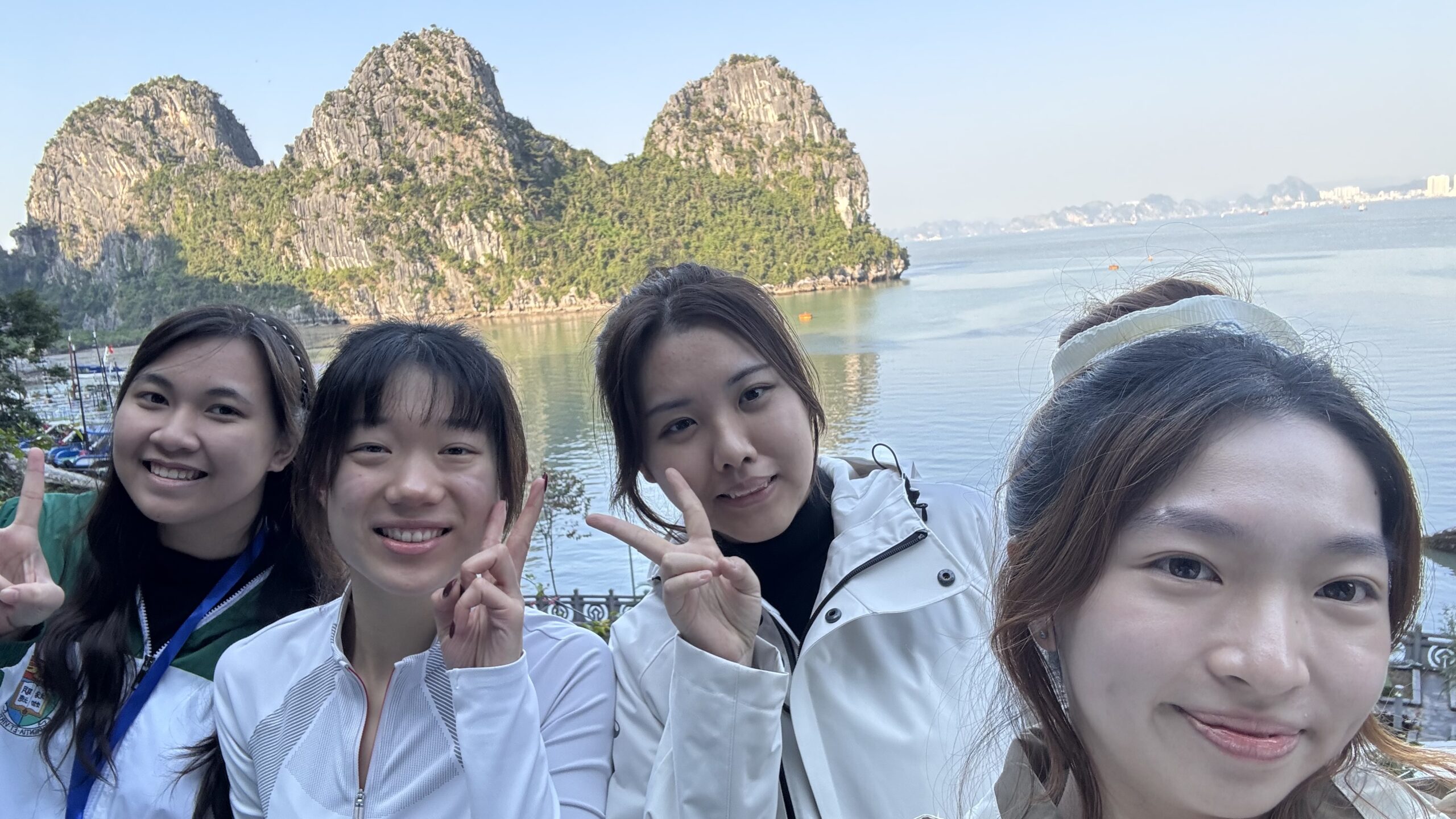
Time went back to the days before I applied, the reason that this tour drew my attention was the terms “culture and wellness”. It is always common for a tour to be immersed in the local culture, ranging from their history to their food. However, the interesting and surprising point was how a tour can promote our own wellness. That was why I had been looking forward to the tour a lot. Not to my surprise, this seven-day tour in Hanoi and Sapa became a mirror that showed me who I am when I’m outside my familiar routines, and who I can become if I stay open, patient, and curious.
As this is the first time I have ever been to Vietnam, everything is new to me. No matter is their culture, environment, people, or food, those were all my new experiences. While being in Hanoi and Sapa for several days, we noticed that the language barrier is a problem between the locals and us. Even if we speak fluent English, it would be an issue for the locals to understand fully. Fortunately, I am so grateful that we met and become a friend with our groupmate who is a Vietnamese and speaks fluent Vietnamese. Our journey in Vietnam would not have been that smooth without her help.
Throughout the trip, I believe everyone had an unforgettable experience on Day 2. For me, as a future educator who works with children with special needs, the takeaway from that day was being flexible at all times. Facing various challenges throughout the day, my groupmates and I had changed our plans frequently. First of all, our target participants. While our designed activities were planned based on the ability of participant, the changes right before our activity started had surprised us. Luckily, our group may alter the execution as soon as possible. We changed the content of our activity to match the participants’ capabilities. We are also glad that the activity not only drew children’s interests, but also attracted many staff to take part in the activity. In this regard, I learned that communication is not only language proficiency, but also gentleness, pacing, and attentiveness to how others receive what you give. Besides, even if we had to cancel our activity 2 (making Chinese lanterns) due to the high level of difficulty for our participants, we found a way to make all the lanterns for souvenirs. It is important for us to be flexible when we cannot follow our plans. Like a wise word from our field, ‘Focus on the progress, not the product.’ We had learnt the knowledge and skills about the Chinese New Year. That is what we are grateful for.
Another thing is that the tour makes me grow in physical wellness. I am never a sporty person, so before the trip, I was afraid that most activities, such as kayaking and long trekking, might not be accomplished. Yet, the trip gave me a safe space to try without being judged. In Ha Long Bay, I learned that being active does not always mean competing or pushing to extremes; it can also mean moving at a steady pace, paying attention to your surroundings, and simply showing up. When I finally got onto the kayak, the nervousness slowly turned into enjoyment. I felt proud, not because I performed perfectly, but because I challenged my own assumptions about what I could do.Looking back, I am truly happy that I joined this tour. The trip showed me that wellness is not one single concept – it includes physical endurance, emotional stability, and the ability to stay open-minded in a different cultural environment. Most importantly, it reminded me that growth often happens when I step outside my comfort zone. As a future educator, I hope to bring this mindset back with me – to stay flexible, to focus on progress, and to create inclusive spaces where every person can learn and feel valued.
Kylie Law
BEd (Early Childhood Education & Special Education) Year 3
Group 2
I would like to express my gratitude to CEDARS LEAF for organising this tour to Vietnam. To my knowledge, LEAF is a new office, and this trip is the first one you have organised. Even more meaningful is the fact that this is the first HKU-wide journey to Vietnam in recent years.
Travelling has the power to heal. Perhaps that is why this tour is branded “cultural inclusion and wellness”. In many respects, I am a happier person after these seven days.
It was for this expedition that I started learning Vietnamese. I have always believed that to best experience a country, one should have a basic grasp of the native language in order to have direct conversations and form genuine connections. As a Cantonese speaker from Hong Kong, I also feel a warm sense of familiarity with the Vietnamese language because of the many linguistic similarities. I spent roughly two weeks after my semester-end exams taking daily intensive classes with my private Vietnamese tutor. The effort paid off.
I was elated when I used my broken Vietnamese to represent our group and introduce Hong Kong’s Chinese New Year practices at a local community centre. At night, we had ample free time, and I felt satisfied whenever my Vietnamese proved helpful for asking directions, bargaining, making payments, chit-chatting, and so on. Those small moments made the memories even more vivid.
The chance to visit Vietnam is also deeply personal to me. My late mother was very reserved about her childhood and never told me much. She did, however, leave a few clues, such as a faded photo of herself in a Vietnamese primary school uniform. It now falls to me to piece together this jigsaw puzzle on my own.
Although we visited Northern Vietnam rather than the South, where I believe my mother grew up, I still gained a subtle sense of the kind of environment she spent her childhood in. On the first day, I also had the opportunity to discuss my mother’s background with one of the HanoiKids volunteers. I now have more clues to continue my root-tracing journey in the years ahead. I will definitely visit Vietnam again.
As a politics (and law) student, I couldn’t overlook the rich history behind many of the places we visited. On Day 4, when we stopped at the Sino-Vietnamese border in Lào Cai, it struck me that, despite the brief war between the two countries in 1979, Lào Cai has once again become a peaceful and lively hub for trade and exchange between both sides. The Belt and Road Initiative might sound abstract to us, but there we saw the strong bond between China and Vietnam with our own eyes. Having Chinese lineage and Vietnamese roots myself, I am glad to witness this.
It was interesting to spot the red-and-blue five-pointed star flag occasionally while trekking in Sapa and on Train Street in Hanoi. That flag symbolised the struggle of the people in the South to reunify the country during the Vietnam War. I felt a quiet sadness when our tour guide Hugo, on the last day, spoke briefly about the war’s lasting impact on the people.
The opportunity to converse with members of the H’mong ethnic minority in Sapa was invaluable. I also experienced several firsts in my life, such as standing higher than the clouds (outside of an airplane) at Mount Fansipan and swallowing a raw chilli during the farm tour.
Lastly, I can’t miss this chance to point out that the entire geographical scope of this tour lay within the historical region of Tonkin. Sound familiar? Tonkin (東京) Street in Kowloon does not refer to Tokyo, it refers to Northern Vietnam. Don’t mix the two up again now that we have visited Tonkin in person…
Thomas Au Yeung
BSocSc(Govt&Laws)&LLB (Double Majors in Law & Politics and Public Administration) Year 6
Group 2
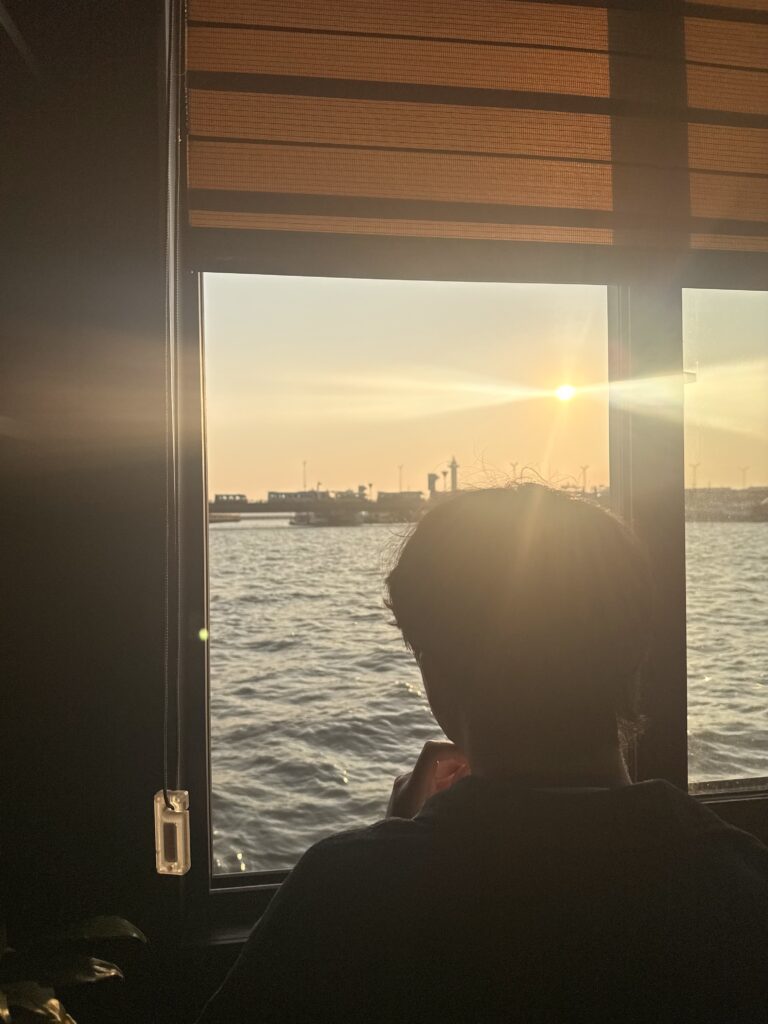
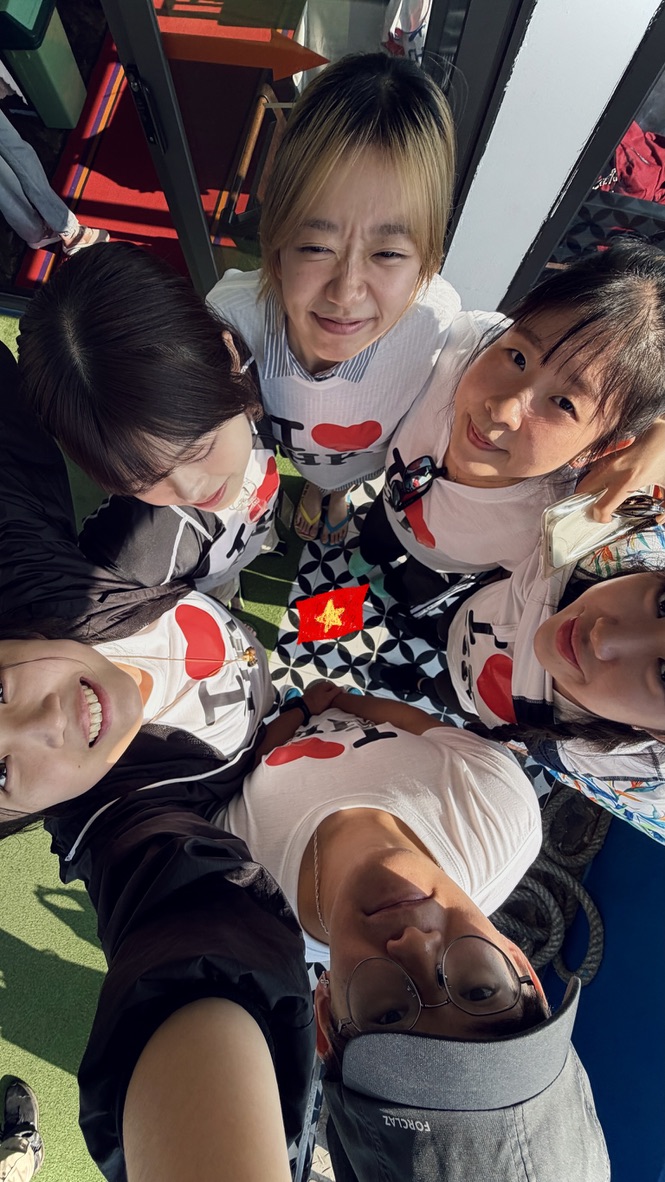
Reflecting on the past seven days in Vietnam, I recognize that this journey was not just about exploring the country’s political landscape and rich history; it also held up a mirror for personal growth, especially in my understanding of leadership.
When I applied for this program, I eagerly volunteered for the role of team leader, believing it would enhance my chances of being selected due to the extra responsibility. My previous experiences in leadership roles gave me the confidence that I could easily manage a group. However, I soon realized that I would be working alongside individuals from different faculties and academic years. The moment I saw the group list, I felt a wave of uncertainty wash over me. How could I lead a group comprising members with much more experience than myself? This realization initially left me feeling daunted and worried.
Despite my doubts, I knew I had to embrace this challenge. I took the initiative to reach out in our group chat, organizing a pre-trip gathering to foster connection. After our lunch and the pre-trip briefing, a magical chemistry developed among us through hilarious conversation and harmonious work allocation for the pre-trip presentation, transforming the initial apprehension and timidness into a sense of bonding and friendship.
Even now, our group remains closely connected, sharing reels and planning future activities. This ongoing interaction warms my heart, reaffirming the importance of teamwork and mutual support and appreciation in effective leadership. Initially, I questioned whether we would maintain contact after this trip, but it became clear that our shared experiences had forged a bond that can last beyond the 7 days in Vietnam.
Through this journey, I learned a vital lesson: true leadership is not about shouldering responsibilities alone; it’s about fostering an environment where everyone feels valued and engaged. As a leader, I recognized the necessity of enjoying the journey alongside my peers. I discovered that I could be both a leader and a member of the group. Knowing my responsibility is undeniably important, but letting go of my incessant worries about logistics and the safety of the group allowed me to fully immerse myself in the experience and indulge in the breath-taking scenery, helping me to grow from what I see and feel without excessive worries.
On our last night in Vietnam, I initiated everyone to share constructive feedback and comments to each other. Some of them showed sincere admiration to me, saying that I process maturity that is beyond my age and they are so thankful to me as they think the reason behind our close bounding are mainly contributed by my unwavering enthusiasm to encourage group activities. Yet, I realized that our bond was built on more than just my efforts. The essence of a lasting friendship and effective leadership lies in mutual contributions. Our unforgettable moments—from wearing the “I Love Hong Kong” T-shirts to diving into fun activities—were made possible by everyone’s active participation. Without their enthusiasm and engagement, our journey would not have been as meaningful.
This trip has brought experiences, laughter, and growth to me. I learned that effective leadership is a dance of collaboration, mutual support, and shared joy. As I move forward, I carry with me the invaluable lessons of teamwork and the lasting friendships that blossomed during this unforgettable adventure in Vietnam. Winter is cold in Vietnam, but the people I meet here and along the way always keep the memories warm.
Sally Ho
Bachelor of Social Science (Psychology) Year 1
Group 3 Leader
One thing I noticed the moment I set foot on Vietnamese soil was the frequent presence of various religions. At least from what I know, one defining feature of communism is that it—at least theoretically, ideologically, and historically—opposes God and all forms of religion. However, from the very first day, on our way to the city center, I saw various churches from the bus, even though we were definitely not yet in the city center.
This photo was taken at a rest area on our way back to Hanoi from Sapa. The churches were much bigger and more glamorous than I had expected. It was not only Christianity; many different kinds of religions could be found in Vietnam. I saw mala beads being sold at the corners of markets in Hanoi, and I saw Taoist paper talismans stuck on the doors of a restaurant where we ate during a long trek.
I also considered the possibility that these religions were able to exist mainly because they were not located in the city center, or because they were treated as personal choices that the government was not particularly eager to intervene in. Meanwhile, the Temple of Literature could become a landmark because it also functioned as a university and an examination site for past generations, which allowed it to be excluded from strict religious categorization. However, I also found 珠碧靈祠 (likely a Taoist temple) located in the city center of Hanoi.
Although I had no way of confirming whether it was still in use, the architecture clearly still existed and was well preserved.
Aside from the fact that religion and religious buildings were far more prominent than I had expected, I was also struck by how religious items—and even tombs—were portrayed quite differently from what I was used to.
Out of respect, I did not take any photos of the tombs. However, while traveling by bus to different places, we frequently saw graves along the way. In fact, there were even graves located next to the hotel where we stayed in Hanoi. One striking difference compared to Hong Kong was that the tombs were very colorful and expressive. Although I have no concrete proof, they gave off a strong “Taoist vibe.” Many of them looked like miniature houses. Another interesting observation was that many of these tombs were located very close to residential homes.
I am not sure whether this is also the case in central Hanoi, as we did not have enough time to explore the area and city planning there may be different. However, in the suburbs, people lived very close to these graves and seemed largely unbothered by their presence, which I found particularly interesting.
This image from Alamy represents quite well what I observed. The graves are vividly colorful, and on the left-hand side of the image, there is a house where someone would likely have lived. I had expected tombs to be more subdued in color, or perhaps even uniform in style, similar to those found in the early years of the USSR. Although I was not expecting mass graves, I did expect them to appear more similar to one
another and generally dull in appearance. Instead, they seemed highly personal and colorful. This sense of individuality was reflected not only in the tombs but also in the portrayal of religious items.
When I visited the Temple of Literature, I noticed that Confucius—who, at least in Chinese culture, is more often regarded as a teacher rather than a god—was represented quite differently from what I was accustomed to. Typically, statues of Confucius in Chinese contexts are more low-key and restrained in color. However, in the Temple of Literature, the statue of Confucius was richly decorated in red and gold, which I would boldly describe as something of a cultural shock. Out of respect, I was unsure whether it was appropriate to take a photo, so I did not do so. Instead, I have included an image from Alamy for reference.
Although I am neither an expert in religion nor particularly interested in it, this aspect of Vietnam truly caught my attention. If I had imagined religion in Vietnam before this trip, I would have expected it to be more subdued, underground, and, of course, less colorful. I do believe that restrictions or challenges may still exist for people practicing their religions—issues that I could not fully understand or uncover during such a short trip, or even now as I continue researching while writing this.
Nevertheless, it was both interesting and surprising to see that religion in Vietnam appears, in many ways, more colorful and personal than I had anticipated, especially when compared to the forms of Christianity, Buddhism, and Taoism that I am familiar with.
Yoyo Tam
BA (Double Majors in History & Korean Studies)
Group 3
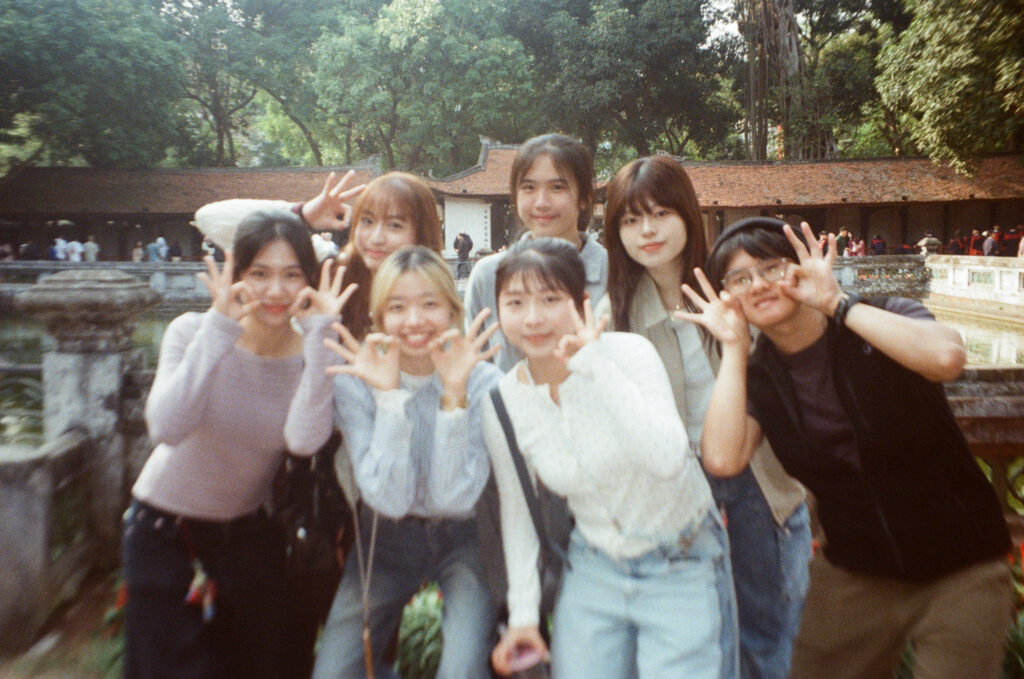
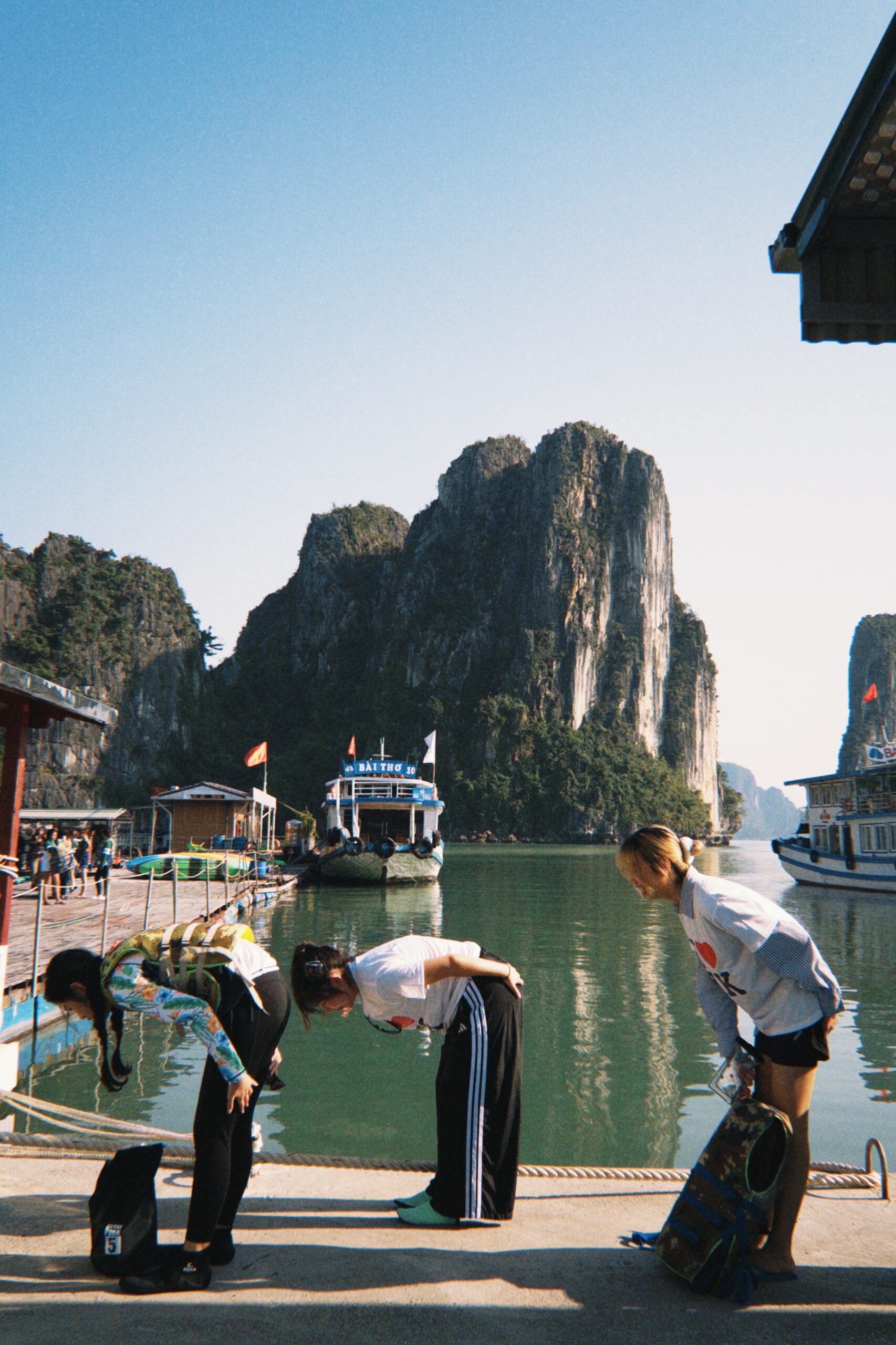
There are two things from this trip that really stuck with me—the kind of stuff I keep thinking about even now that I’m back.
First, the people—both my teammates and the locals we met in Vietnam.
Honestly, before this trip, most of us were basically strangers. But being thrown into this experience together changed everything. What really got to me was how incredibly supportive everyone was, even when we were tired, hungry, or just completely worn out. Our group had some pretty random, silly (I think they’re funny) ideas sometimes—like deciding to wear the I love HK T-shirt to Ha Long Bay and wander around Hanoi at night to get yummy banh mi— even if we were exhausted, someone would always go along with it. No one ever shut anyone down. That kind of spontaneous, “yes, let’s do it” energy made the trip so much lighter and more fun.
And then there were the Vietnamese people. I won’t lie—parts of Vietnam felt more underdeveloped than I expected. In Sapa, I saw mothers with babies strapped to their backs, selling souvenirs on the street. It was confronting, honestly. But over those seven days, what stood out wasn’t the poverty—it was the kindness. Even when life clearly wasn’t easy, so many people we met smiled openly, helped without being asked, and shared what they had. They were genuine in a way that felt rare. It made me rethink what “wealth” really means.
The second thing was kayaking in Ha Long Bay.
Oh my god, that day was perfect. The weather was just glorious. No city noise, no smog, no blinding lights—just clear water, quiet waves, and these huge, ancient limestone rocks everywhere. My friend Sally and I shared a kayak, and we went from being total beginners—screaming and laughing every time we wobbled—to just floating. We followed some others to a shady spot, lay back in the kayak, and stared up. The rocks looked timeless, like they’d been there forever. And the sky was so clear it felt endless.
Lying there, it hit me: I am so, so small. These rocks have been here for centuries. They’ll be here long after I’m gone. People will come and go, but the bay remains, changing slowly, almost silently. It was peaceful in a really deep way—not just “nice views” peaceful, but more like a peaceful perspective.
What this trip gave me:
I went to Vietnam hoping to see something new—I love traveling, I love watching how people live in different places, touching, tasting, taking it all in. And I did get that. But I also got so much more: a handful of new friends I really click with, moments of real human kindness that felt pure, and this quiet but strong reminder from nature—that time passes, but some things endure.
So yeah, thank you, CEDARS, for putting this together. This trip didn’t just show me a new place—it let me feel it. And I’m really grateful for that.
Elena Lam
Bachelor of Science Year 1
Group 3
The 7-day trip to Northern Vietnam had a significant impact on me. During this journey, I faced new challenges, got the chance to interact with different trip mates and communicate with locals. These experiences are my biggest takeaways. Through encountering those challenges, I became more resilient. Meanwhile, being exposed to different cultures and values allowed me to gain new perspectives on life. Additionally, traveling with 30 groupmates gave me the opportunity to connect with people of various personalities, learn about their viewpoints, and improve my communication skills.
To commence with, this trip was a bit chaotic for me, not because of the itinerary, but because of my own challenges. One of the biggest obstacles was breaking my camera, which I had bought only a few months earlier. This deeply affected my mood at that moment, I felt helpless and unsure of what to do. However, since it happened in the middle of the trip, I didn’t want to let it ruin my experience, so I perks myself up, told myself to stay positive, and enjoy the trip first. I temporarily set the problem aside, and turns out the camera is fixable. I believe that maintaining a positive mindset when facing challenges is very important, don’t take it too serious. This helps prevent setbacks from affecting you too much.
Another experience that left a big impression was the long trek to Lao Chai and Ta Van villages. Walking on roughly constructed roads was difficult, and as I am not a very sporty person, I started feeling tired early on, which perhaps is just about 1/10 of the route. But seeing my tripmates who kept going, and admiring the magnificent rice terraces and traditional villages, I was motivated to push through. I told myself not to give up, I should explore more and try my best. In the end, I successfully reached the destination. This experience taught me that I am capable of doing things I previously thought I couldn’t. I just needed a bit more courage. I believe I’ve become more resilient in overcoming obstacles because of this trip.
Besides building courage, I gained a new perspective on life by experiencing different cultures and values. Before the trip, I had some negative perceptions about Vietnam or Southeast Asia, mainly due to concerns about scams and safety. However, after spending seven days here, exploring the local culture, communicating with Vietnamese and seeing how they live, I realized that people are the same. Regardless of wealth, ethnicity or historical background. Everyone struggles with similar things, like love and family. I learned not to judge others based on stereotypes without even trying to understand them. I still remember how nice Vietnamese are when we seek for help. We are all humans who share similar hopes and fears towards life.
Lastly, as someone who is a bit introverted, I learned how to communicate better with others during this trip. I often didn’t know what topics to start with when meeting someone new, which could make interactions awkward. But through this experience, I observed how my friends and others initiate conversations and keep them going. I believe these skills will be very useful for my upcoming exchange journey.
Finally, I want to sincerely thank all the teachers, organizers, and tour guides who planned this wonderful trip and ensured our safety. They provided a clear itinerary, allowing us to fully enjoy the trip without worries. I also want to thank my Group 3 mates, who are super supportive, funny, kind, and cute. Their presence made my trip even better. I believe that this trip will become one of my most memorable university experiences.
Amy Chau
BA (Double Majors in Chinese and History)
Group 3
Participating in this Northern Vietnam cultural exchange programme has been a transformative experience that profoundly reshaped my worldview. This journey was far more than a sightseeing tour; it was a lesson in cultural humility, environmental stewardship, and the beauty of human connection. I am walking away from this trip with a deep sense of gratitude and a renewed perspective on how I interact with both people and nature.
One of the most significant impacts of this programme was the shift in my attitude towards disadvantaged communities during our volunteer work with VVCD (Volunteer in Vietnam for Community Development). Initially, I approached the teaching activities with a “helper” mindset, assuming I was there primarily to provide support. However, this preconception was quickly challenged. Interacting with the participants, I was humbled to discover their exceptional talents in handicrafts—skills that far surpassed my own, especially in the “Paper Flower” activity. This experience taught me that disadvantaged individuals are not defined by their circumstances but by their unique strengths and inherent dignity. I realized that true service is not about pity, but about equality and mutual respect. Recognizing them as equals with valuable skills to share has fundamentally changed my approach to community engagement; I have learned to listen more and judge less.
Furthermore, the trip instilled in me a much stronger commitment to environmental protection. This was most evident during our visits to Ha Long Bay and Sapa. At Ha Long Bay, I was struck by the strict regulations prohibiting plastic bottles in the scenic area. While it initially seemed like a minor inconvenience, I soon understood it as a necessary act of discipline to preserve a UNESCO World Heritage site. It reminded me that protecting nature requires collective responsibility and tangible action, not just slogans.
This lesson was further reinforced in Sapa, where the trekking through local villages offered a glimpse into a harmonious way of life. Observing the traditional farming methods and the stunning terraced rice fields made me realize how deeply the local ethnic minorities are connected to their land. Their sustainable way of living, which works with the natural rhythms of the mountains rather than exploiting them, definitely offered a powerful contrast to the fast-paced lifestyle of the city. These experiences combined have made me much more conscious of my own ecological footprint and the importance of preserving such fragile ecosystems.
Beyond the learning outcomes, this trip was filled with moments of pure joy and healing. Reaching the summit of Fansipan was an unforgettable highlight. Standing above the sea of clouds, I felt a profound sense of peace and a spiritual connection to the natural world.
In conclusion, I am truly happy to have participated in this program. It has been a catalyst for my personal growth, teaching me to approach diverse populations with humility and the environment with greater care. I would like to express my sincere thanks to the organizers and my fellow groupmates for making this trip such a meaningful chapter in my 4 years university life.
Ray Liang
BSc(Major in Geology(intensive)) Year 4
Group 3
The Northern Vietnam tour was an unforgettable journey that left a deep impact on me. It was a chance for self-discovery, cultural exploration, and meaningful connection. Among all that I gained from this trip, what I treasure most are the friendships formed, the values learned, and the broadened understanding of culture.
One of the most valuable gifts from the trip was meeting a group of genuine friends. Through round-the-clock interactions, we became surprisingly close. Friendships were not only built within our own group, but across different groups. They formed one of the most unforgettable parts of the trip and I believe our relationships will be long-lasting.
Stepping out of my comfort zone was also one of the biggest lessons from this program. This was my first time joining an overseas tour on my own, and at first, I felt uncertain and slightly anxious about spending a week with many unfamiliar people. However, the experience turned out to be wonderful. I learned to be brave and proactive—to seize every chance to learn rather than waiting passively. Whether it was trying unfamiliar food, speaking to local people, or volunteering for SEN kids, I picked up the joy and courage of taking initiative. This courage and openness are something I hope to carry forward in my studies and future career.
The most tremendous takeaway was learning to appreciate and embrace cultural differences. Vietnam, compared to Hong Kong, is less developed in areas such as infrastructure and economy. At first, we encountered many what might be called “cultural shocks.” For example, their working pace was much slower, and their hygiene standards differed from what we were used to. Yet I gradually realized that these were not shortcomings but reflections of a different way of life. The locals live the presence rather than rushing for future. Likewise, villagers whom we might perceive as “poor” were actually satisfied with their lives. It made me reflect on how discriminatory it is to judge others by our own cultural standards. True appreciation of another culture begins when we let go of our prejudices and view the world from their perspective. When we stop being judgmental, what once looked like “problems” become unique beauties. This is perhaps the most valuable lesson and the meaning of travelling.
During our visit to the Chinese Embassy in Vietnam, I also gained a clearer understanding of the relationship between China and Vietnam. We were fortunate to meet diplomatic officers who introduced us to the evolving cooperation between the two countries under the Belt and Road Initiative. I learned that Vietnam is a rapidly developing economy with enormous potential, which has significant implications for future economic cooperation and employment opportunities in the region. This insight was both inspiring and practical as we prepare to enter the workforce soon.
The biggest challenge came on the volunteering day, when we were assigned to teach Vietnamese children with special educational needs. The situation turned out to be much more chaotic than expected, and things did not go according to our original plan at all. However, we quickly adapted by adjusting our program and modifying the activities. Thanks to everyone’s flexibility and teamwork, the session still went smoothly and successfully in the end. Through this experience, I truly saw how capable and resilient we HKU students could be in handling unexpected circumstances. Despite the language barrier, we managed to connect with the kids and found genuine joy in the process of teaching and interacting with them.
Overall, I am very grateful and satisfied with this trip. The itinerary was well- organized, the food and scenery were wonderful, and the friendships made every moment worthwhile. I would especially like to thank our local tour guide, who did his best to accommodate our needs, and the school staff, who cared for each of us throughout the journey. This trip was truly eye-opening and unforgettable and will continue to shape how I see the world and understand cultures in my future endeavors.
Danee Cheng
BA (Major in Chinese Language and Literature)
Group 3
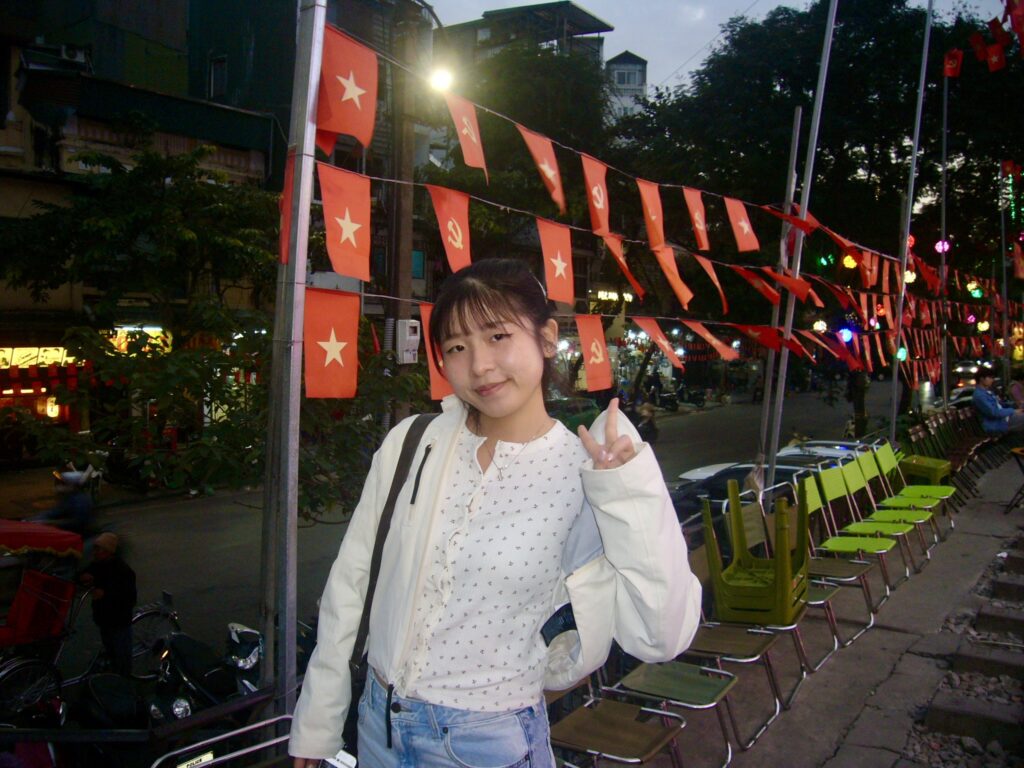
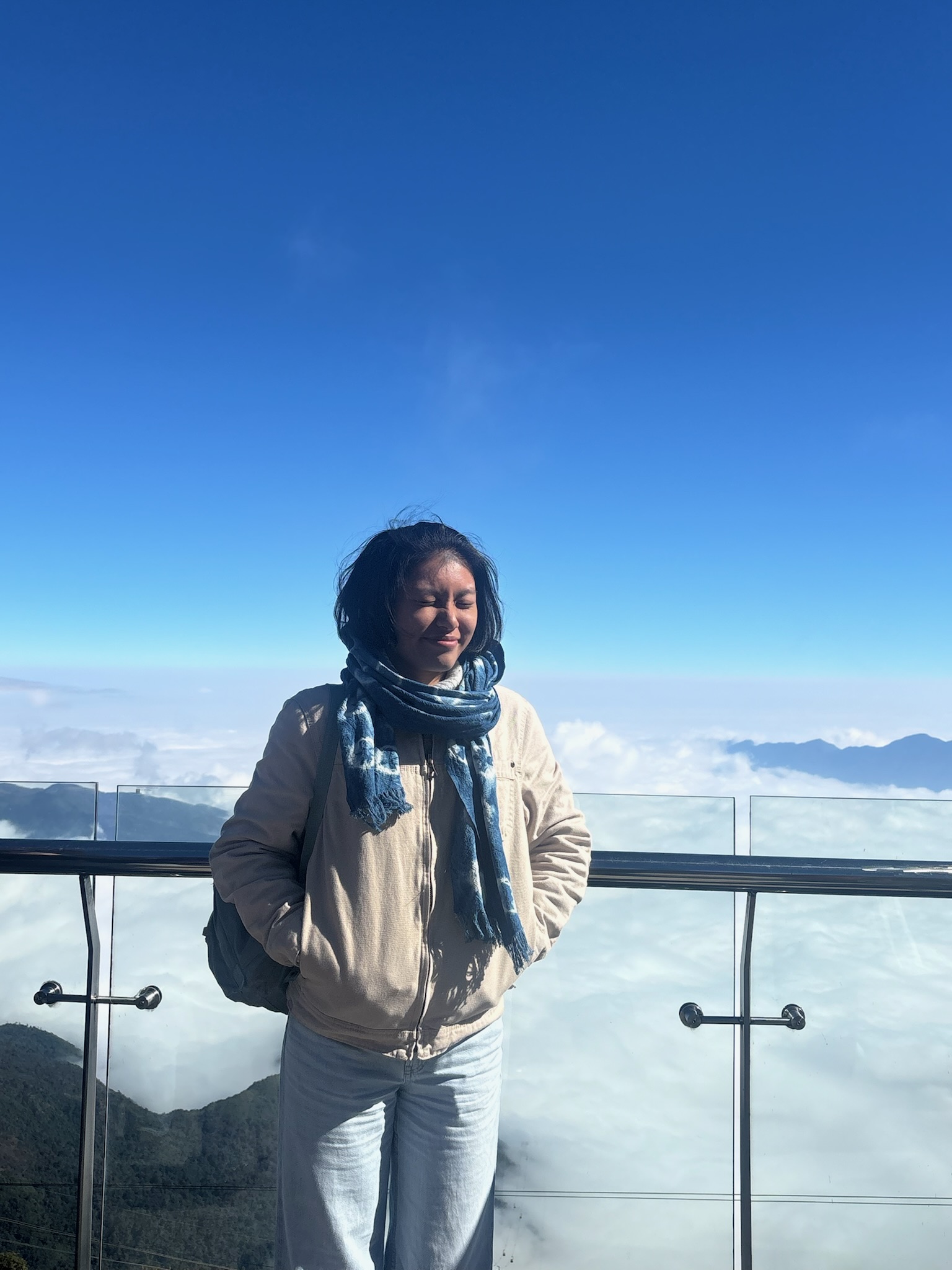
Vietnam is a special place: a place of unbelievable, a place of human warmth, a place of chaos. Although I didn’t have the best time on this trip, I look forward to the next trip in Vietnam. Here are three things I would like to highlight: cute humans, value of simplicity and a personal reflective journey.
In terms of the people in Vietnam, I would say they are nice and tolerant in general. It’s all from my observation of little things: a taxi driver running to me to give my phone back to me, more than 3 massage therapists adjusting their treatment for me to meet my multiple requests, a sweet tour guide bringing my group to experience the most of Vietnam cuisine in a limited time. These are all unexpected warmth i can feel from vietnamese.
Another highlight is the value of ‘pho’- the simplicity of pho gives me the greatest feeling and filling when the schedule was in a rush and I felt hungry. Pho is a kind of local noodle filled with meat and noodles in Vietnam, which is not hard to see in Hong Kong. Until the last two days in Vietnam, I knew its preciousness. It filled my stomach when I had 10 minutes of breakfast time. It gave me warmth when I was not satisfied with cold dinner and unmatched flavours of food.
Pho is definitely the simplest food and the warmest food- it is not about the taste, but the value of instant fulfillment and saved time.
Going through these 7 days, I can feel how down-to-earth the Vietnamese are. More importantly, I know myself better. Before I joined this trip, I didn’t expect myself to be one of the successful participants and group leaders because of the competitive number of applicants.
Perhaps, it was due to my previous experience as a person-in-charge in a service trip and lack of participants wanting to take charge of the leader role (seemingly heavy duties and lots of responsibilities). Plus, I wanted to take a break from 2 consecutive years as an executive committee of different societies- I realised that my life is always overwhelmed with external duties instead of my personal duties. All I want for 2026 is a BREAK. However, 卸膊 (escape from my responsibilities) is never my choice. Although I enjoy new conversations and connections, it was tiring for me to organise and assign work for groupmates who are not attentive and active.
But, I still feel grateful about the dynamics of my group.
Due to sudden changes of volunteering events, we were arranged with service targets with different special needs instead of normal communication teens (orginal targets). It is also the day I know my groupmates better and myself better. As we could not follow our planned activities and schedule, we needed to adjust our flow and our pace to interact with our targets in the first place- the situation was as chaotic as my previous service session. The difference is: I didn’t panic and doubt myself for the uncontrollable factors, but let everything go with the flow and make happiness as our goal. It was a huge change for me that I had no self-doubts in my brain. Looking back, the chaos were all stupid yet sweet memories- how we interacted and tried to understand our service groups made everything heartwarming. I really appreciate all of us being so patient and soft when we are in such a situation.
It is a new yellow sphere in my headquarters.
Anna Li
BSocSc (Sociology and Counselling) Year 3
Group 4 Leader
Setting foot on the soil of Vietnam, reaching out to the local people and exploring both urban and rural landscapes with my schoolmates from HKU was an eye-opening experience. Throughout the seven-day journey, we wandered through bustling cities, hiked up mountains and cruised around the sea bay with the locals to gain a deeper understanding of this beautiful country. What left the deepest impression on me was seeing how Vietnam has successfully integrated elements from different cultures while still making great efforts to preserve its own. This cultural hybridity, combined with the warmth and hospitality of the people, has made the country a welcoming destination that draws millions of international visitors every year.
With some prior knowledge of how Vietnam was once ruled by China and France, I could see how its architecture, religions and cuisine vividly reflect its layered history. Riding on the coach and gazing out the window, I noticed that some buildings like the Hanoi Opera House and St. Joseph’s Cathedral retain distinct Western architectural styles. Yet, just around the corner, Chinese temples with traditional inscriptions on their doorways reveal another cultural layer. Around Ba Dinh Square, the French-style Presidential Palace stands beside the Ho Chi Minh Mausoleum, which features a stripped classical architectural design. Around the same area, I also encountered the Taoist Quan Thanh Temple and the Confucian Temple of Literature. Even Vietnam’s famous bánh mì bears traces of French influence through its use of the baguette. This blending of architectural styles, religions and cuisines powerfully illustrates Vietnam’s openness to different cultures and its ability to embrace its colonial past. Rather than erasing these remnants of history, Vietnam has managed to incorporate them into its cultural identity, transforming them into a unique appeal for visitors wishing to understand its complex heritage. In this sense, Vietnam strongly resembles Hong Kong, which was also once under colonial rule and retains many Western elements today. The shared fusion of cultures in both places reflects not only their histories of international exchange, but also their enduring openness to the world.
Apart from staying in Hanoi, we also visited Sapa, which is renowned for its stunning natural scenery. The view at Ha Long Bay, a UNESCO World Heritage Site, was truly spectacular. During the boat trip, we were surrounded by the crystal-clear water so pure that the reflections of the rocks shimmered clearly on its surface. Beyond the seascapes, we went hiking through Lao Chai and Ta Van villages to learn about the farming life of Vietnam’s ethnic minority communities. The sight of terraced rice fields cascading down the valleys was breathtaking, something rarely seen in Hong Kong. The locals’ distinctive clothing and traditional handicrafts, such as using honey wax to draw patterns on fabric, offered a whole new cultural experience. While hiking, we chatted with some friendly villagers about their daily lives in the mountains. These face-to-face interactions were invaluable in helping us understand their way of life more deeply. Another unforgettable highlight was reaching Fansipan Mountain by cable car. When we first boarded at the station, the weather was so foggy that we could barely see anything outside. Yet as the cable car ascended, it broke through the thick clouds and suddenly, a brilliant blue sky unfolded before us at the summit, 3,143 meters above sea level. Gazing down at the endless sea of clouds was an indescribable moment I will never forget. Spending time surrounded by nature, in such calm and tranquility, truly helped me unwind and leave all my worries behind.
Through this trip with my schoolmates, we explored both the urban and natural sides of Vietnam, spending meaningful time with local university students and villagers. These experiences allowed us to gain a deeper understanding of this amazing country and left us with countless unforgettable memories. I truly appreciate the openness and hospitality of the Vietnamese people toward foreign visitors and cultures, which make Vietnam an incredible destination for both travel and relaxation. Beyond its remarkable landscapes and rich culture, it is the people who made this journey even more enjoyable and memorable.
Francisca Chan
BA (Double Majors in Global and Area Studies & Art History)
Group 4
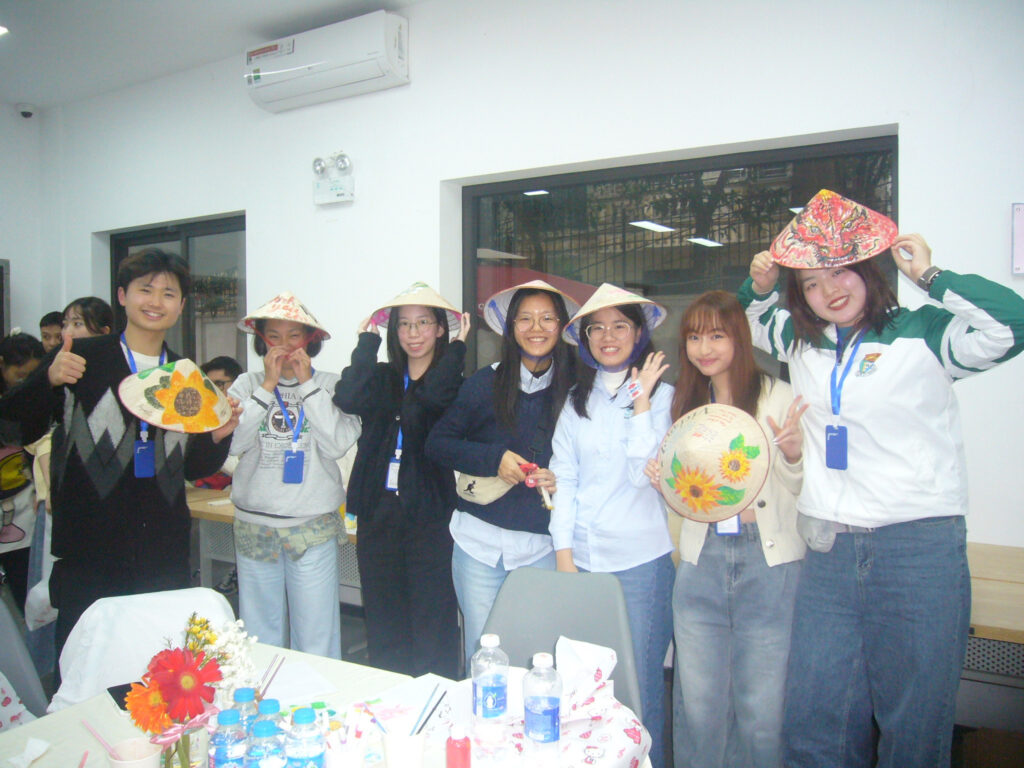
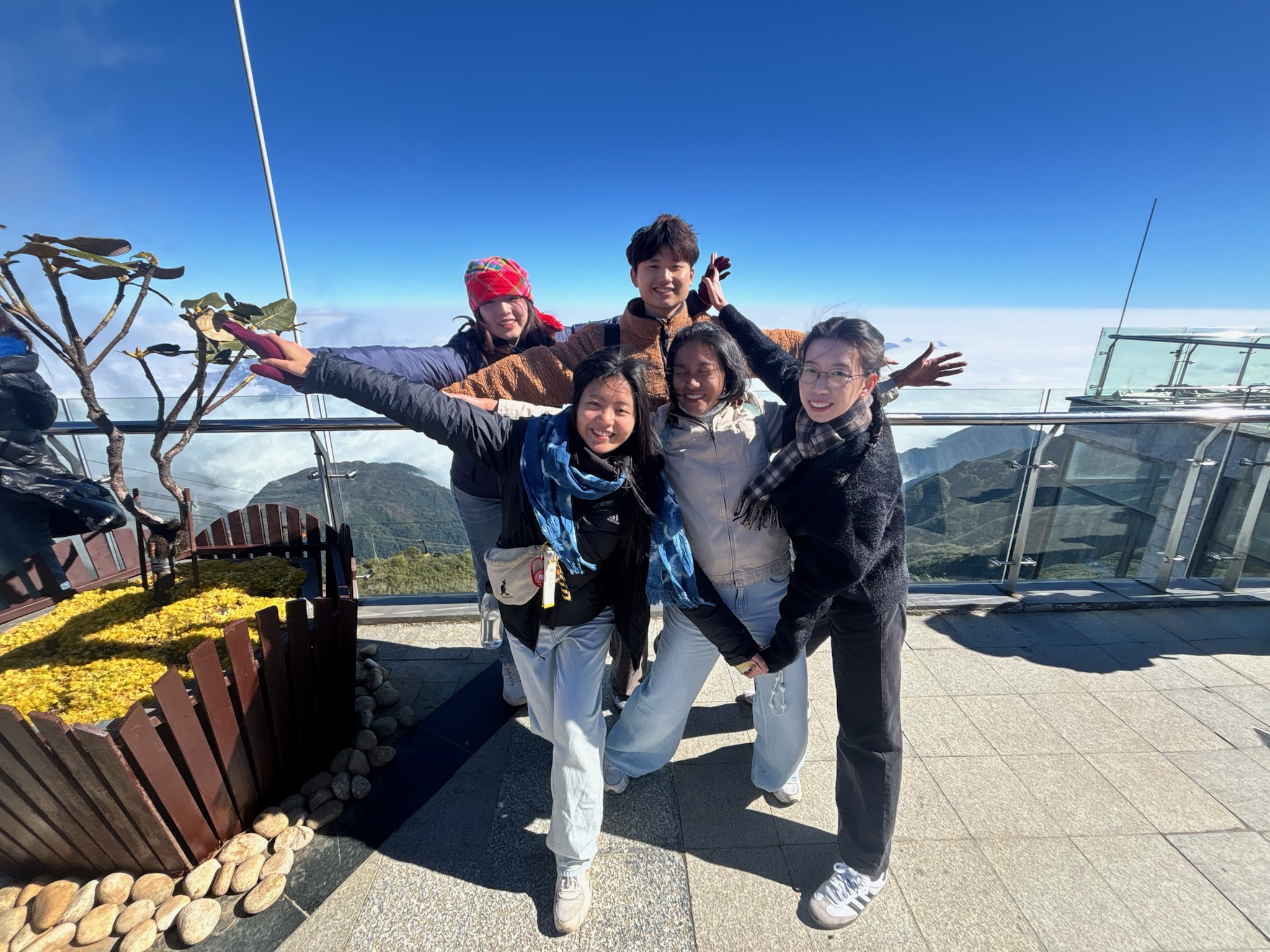
What Makes a Good Trip?
I would say it is the people — the people we meet along the way and the people we travel with as a team truly shape the experience.
The Centre of Development and Resources for Students provided a wonderful opportunity for students at HKU to mingle, collaborate, and learn in an environment completely different from our everyday life in Hong Kong. The setting in Hanoi, located in the northern part of Vietnam, offered a rich and unique cultural experience. Immersing ourselves in the local traditions, cuisine, and lifestyle not only broadened our perspectives but also deepened the bonds within our group. With the guidance of the tour guide, local university students, and even the Chinese Embassy in Hanoi, I gained valuable insights into the relationship between Vietnam and China. It was fascinating to see how the two countries share similarities in culture and history, yet remain distinct in their traditions and ways of living.
Through exploration and collaboration, we learned to appreciate the value of cultural exchange and teamwork beyond the classroom. One of the most memorable parts of the trip was the trekking experience in Sapa, Lao Chai. As we navigated the mountain paths surrounded by rice terraces, I had the chance to learn about the villagers’ daily lives and living conditions. It was truly impressive to see how each member of a family plays an important role — from farming and cooking to welcoming visitors and sharing stories about their culture. Their warm hospitality and pride in preserving their heritage deeply touched me. They even made a heart shape out of grass and sticks, which was both creative and heartwarming. It reminded me that happiness and fulfillment often come from simplicity, community, and strong family bonds rather than material possessions.
Exchanging ideas with Vietnamese people definitely made the trip more informative and meaningful. Throughout the trip, I could see how much the Vietnamese people love their country. They are thankful for the way their nation is developing and take pride in what they can enjoy within it. They always wear a smile and warmly welcome tourists to their homeland. Their friendliness made our experience even more enjoyable!
Moreover, the scenic beauty of northern Vietnam amazed me. The lush green mountains, mist-covered valleys, and tranquil rivers created a breathtaking view that I will never forget. Climbing to the peak of a 3,143-meter mountain — where a majestic Buddha statue stands overlooking the clouds — was one of the highlights of the trip. Standing at such a height, I felt both small and significant at the same time. The vastness of nature humbled me, yet it also filled me with a sense of inner peace and strength. In that serene moment, surrounded by my peers, I felt calm and grateful, appreciating not only the view before me but also the journey that brought us there Nature, in its quiet power, seemed to heal something within me and remind me of what truly matters.
Looking back, this trip reminded me that learning does not happen only in classrooms or through textbooks. It also takes place through real-life experiences, connections, and challenges that push us beyond our comfort zones. Traveling with other students allowed me to see different personalities and perspectives. We learned to communicate, compromise, and support one another, especially when faced with unexpected situations. Whether it was adjusting to the weather, overcoming language barriers, or sharing meals together, every moment strengthened our bond as a team.
The laughter we shared, the challenges we faced, and the quiet reflections during our journey all made this trip deeply meaningful. I returned to Hong Kong not only with beautiful memories but also with a more open mindset. I became more curious about the world, more appreciative of cultural differences, and more understanding of how people from different places share similar hopes and dreams. Most of all, I learned that a good trip is not just about the destination — it is about the people who travel with you, the connections you create, and the lessons you carry home long after the journey ends.
Kelly Chan
BSc(AC) Year 2
Group 4
The Northern Vietnam Cultural and Wellness Tour was not an ordinary sightseeing visit, but my self-reflection, resilience, and personal growth journey. Cruising Ha Long Bay, hiking in Sapa villages, and hiking to Fansipan Mountain enabled me to leave my day to day life and connect with nature, people, and myself more. No single place could boast of more than beautiful scenery, but they all taught me some valuable lessons of patience, perseverance, and appreciation.
Among the most striking of the experiences was our boat journey in Ha Long bay. I was amid towering limestone islands and serene emerald waters, so that a rare peace of mind came over me. The silence of the bay made me understand that my regular routine is so hectic and that I do not take time to relax to enjoy what is happening around me. When we were visiting Paradise Cave and Woodhead Cave, I was astonished by the way in which nature can form such elaborate and magnificent structures in millions of years. This was a lesson to me that development in the world or among individuals is a gradual process that requires endurance. It made me more tolerant towards my personal and academic growth.
It was an emotional and physically demanding journey to Sapa Lao Chai and Ta Van villages. Taking a stroll around rice terraces and the traditional villages, I personally learnt about how the ethnic locals live. Although they led a very simple life, they seemed to be happy, laborious, and attached to the land. The 10km walk was also a test of my physical endurance and particularly in the muddy and rough roads but this was accomplished with a great feeling of accomplishment. I also found that going out of my comfort zone could result in personal development. This is pertinent to my field since achieving success in my studies will entail the same that I have to endure and maintain perseverance and readiness to confront challenges instead of evading them.
The other attraction was the cable car ride to the top of Fansipan Mountain which is referred to as the roof of Vietnam. And as the cable car climbed, I was able to see strata of mountains extending indefinitely away into the distance. I had to go up 3,143 meters above the sea level, which was symbolic to me, to lift myself above my personal limitations. Being the highest point, I was proud of my progress, not only in this trip but also in my life. It helped me to realize that I should accomplish one step at a time to reach the highest achievable goal.
Another thing about my trip was that I reflected on how I deal with challenges. It was either getting used to a new climate, walking long distances, or coping with fatigue, however, I learned to remain positive and keep on. Such experiences helped me become stronger and to understand that I should be calm when I am in new circumstances. This also helped me to appreciate those around me. I would like to appreciate my teachers, tour leaders and classmates whom I found helpful and companions. Their support and cooperation simplified all the difficulties and made all the moments even more pleasant.
On the whole, I am quite pleased with this visit. The greatest lesson I have learned is that as a person, the most significant growth will occur when I leave my comfort zone and expose myself to new experiences. The stunning Vietnamese scenery would never be forgotten, but what I learned about myself is even more worthwhile. This experience has made me understand that I will own the future with confidence, patience and having a better understanding of the nature and myself.
Chris Hung
BA&BED-CHIN(Double Majors in Chinese Language and Literature and Psychology) Year 5
Group 4
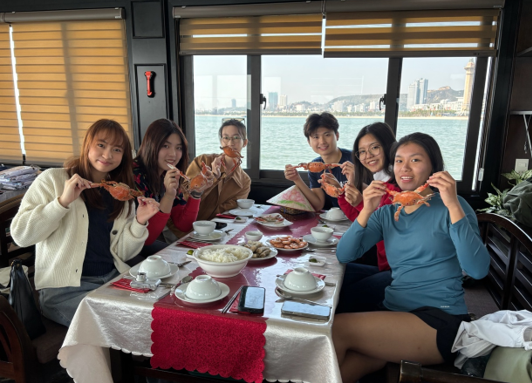
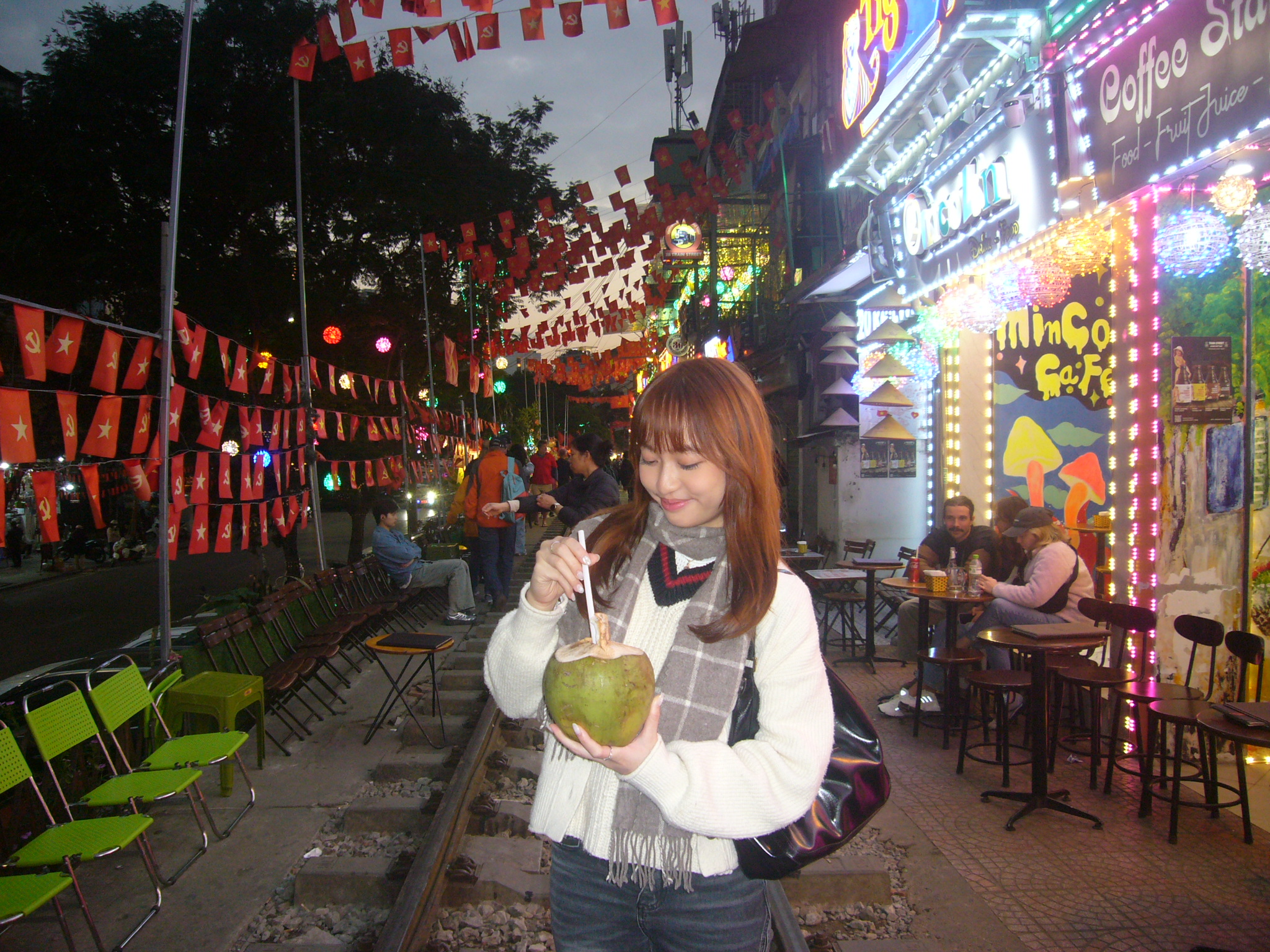
As I reflect on the past week spent in Vietnam, I feel a profound sense of personal growth and appreciation for the rich culture and history I encountered. This tour was not just an exploration of places but also a journey of self-discovery tied intricately to my field of study—international relations and cultural exchange.
From visiting the Ho Chi Minh Mausoleum to participating in a Vietnamese Conical Hat workshop, each experience deepened my understanding of Vietnam’s history and the importance of cultural sensitivity in international relations. The mausoleum, a significant symbol of Vietnam’s struggle for independence, was particularly poignant. It connected the dots between the past and present, reminding me that political ideologies often stem from historical context. Understanding this helped me grasp the complexities of diplomatic relations, especially between Vietnam and its neighbors.
One of the most impactful parts of the tour was the engaging interaction with students from the Foreign Trade University (FTU). Listening to their perspectives on Vietnam’s rapid development was enlightening. They shared their aspirations, challenges, and the national pride they have regarding their culture. This exchange not only helped me understand Vietnam from a local perspective but also underscored the importance of fostering dialogue and understanding in my future career. These insights will inform my approach to international negotiations and cultural collaboration.
However, this journey was not without its challenges. On the first day, I found myself feeling overwhelmed by the hustle and bustle of Hanoi’s busy streets. The noise, the unfamiliar language, and the sheer number of people created a sensory overload that left me anxious. I realized that adaptability is crucial in international settings where cultures differ vastly. To overcome this, I took time to breathe and absorbed my surroundings more mindfully. Embracing the chaos eventually allowed me to appreciate the vibrancy of the city, and I learned to navigate it with more confidence.
The volunteer work at the VVCD (Vietnam Volunteer for Community Development) presented another challenge. It was my first experience working directly with children from different cultural backgrounds. There was a language barrier that made communication difficult, and I feared my inability to connect with them would hinder our planned interactions. However, I discovered that enthusiasm transcends language; through games, art, and shared activities, we created a bridge between cultures. By the end of the session, the joy on the children’s faces was infectious, and I learned that building connections often requires creativity and openness.
Exploring the Old Quarter and the French Quarter, particularly on the street food tour, made me appreciate the significance of food in cultural exchange. Each dish told a story—of tradition, adaptation, and resilience. Trying pho for the first time while engaging with local university students opened a gateway to understanding Vietnamese hospitality and culinary art. This experience reinforced how food can serve as a medium of cultural diplomacy, an avenue through which people connect beyond theoretical discussions.
The trek to Cat Cat Village and the cultural immersion into the Black Hmong community was another highlight. Engaging with local families provided a window into their daily lives and traditions. Sharing tea with them and learning about their crafts made me appreciate the depth and richness of Vietnamese culture. It reinforced my belief that my future work in international relations should prioritize grassroots connections, as these interactions form the backbone of mutual understanding between nations.
As I conclude this journal entry, I reflect on my biggest takeaway: the realization that personal growth stems from embracing discomfort and uncertainty. Every challenge I faced became a lesson in adaptability, understanding, and empathy, crucial traits for my future endeavors in the global landscape.
Overall, this trip was not only enriching but also transformative. I return with new perspectives, a deeper cultural appreciation, and an invigorated passion for pursuing a career that values inclusivity, communication, and collaboration on an international scale. I am grateful for the experiences, the friendships forged, and the lessons learned—each a stepping stone on my path toward becoming a more culturally competent and empathetic individual.
Grace Wong
BBA (Law) & LLB Year 2
Group 4
Spending a week during the semester break walking through the lively streets in Hanoi and Sapa’s natural landscape, gave me a kind of learning that no classroom ever could. The Northern Vietnam Study Tour, with its unique mix of cultural immersion, community engagement and natural exploration, has given me a moment to reflect on my personal growth and reminded me that the true essence of urban and rural life is felt through its textures, tastes, and the people.
As an Urban Studies student, I constantly related each stop on the itinerary to concepts of urban form, social space, and governance. In Hanoi, I encountered different “civilisations” through its architecture. Visiting the Confucian Temple of Literature, French‑colonial churches and buildings alongside socialist monuments, and dense informal commercial streets made colonial legacies and post‑socialist urbanism tangible rather than abstract. Learning from local students about the Old Quarter, where historic ambience and vibrant nightlife coexist, helped me see how planning choices and heritage policies shape everyday life. At the same time, the city’s transport system revealed clear challenges. The limited public transport coverage and the dominance of motorcycles contributed to air pollution and the occupation of pedestrian space, resulting in unpleasant walking experience. Hearing an embassy official talk about Vietnam’s move toward electric vehicles pushed me to reflect again on the significance of sustainability and environmental protection in urban policy.
The community service for youths with Special Education Needs was one of the most challenging yet meaningful parts of the tour. Instead of working with normal children as planned, our group was reassigned to support SEN adults, which was completely new to me. I struggled at first to gain their attention and to guide them through the snack‑making activity we had prepared, especially with the language barrier and my own hesitation to approach them. To overcome the situation, we relied on communicating with them through translator, simple English, visual aids and genuine body language. We demonstrated step by step how to make maltose crackers, encouraged them to share the food with others, and introduced simple paper‑and‑pencil games when they seemed bored. This experience reminded me that human connection often begins with small, patient actions rooted in empathy.
The biggest takeaway was that the best cultural exchange happens when I stay consciously curious and open throughout the journey. This trip was a lesson in the courage of embracing the unfamiliar, not as a passive tourist, but as an active participant. I pushed myself to always say “yes” to try new cuisines like pho rolls and egg coffee without hesitation, to the physical challenge of kayaking in Halong Bay paddling into sea caves, and to trying a Vietnamese foot massage for the first time. This mindset of openness helped me build friendships and conversations throughout the journey. At the Foreign Trade University, our lively discussions with local students gave us a peer-to-peer understanding of Vietnamese youth culture. When Vietnamese students became our culinary guides in Hanoi’s Old Quarter, a simple street food tour turned into a glimpse of Vietnamese local life. During the long trek in Lao Chai Village, casual conversations with Hmong women about farming, family, and tourism made me realise that the real treasure of a place lies in the warmth and stories of its people.
I am deeply grateful to HYAB funding scheme and CEDARS for making this transformative journey possible. My gratitude also goes to our CEDARS staff, insightful local guides Nicole and Hung, for their thoughtful care for us. Finally, to my fellow HKU travellers whose mutual care, jokes on long rides, and honest reflections turned this journey into not just a trip but a shared learning community.
Sammy Chan
BA(US) Year 4
Group 4
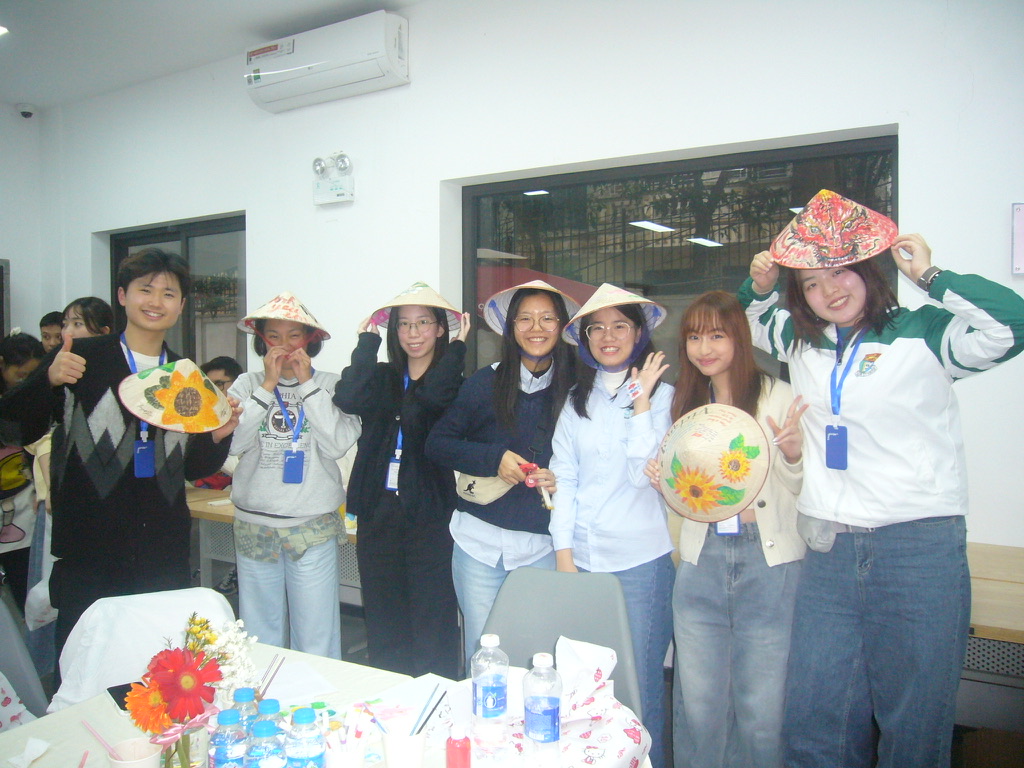
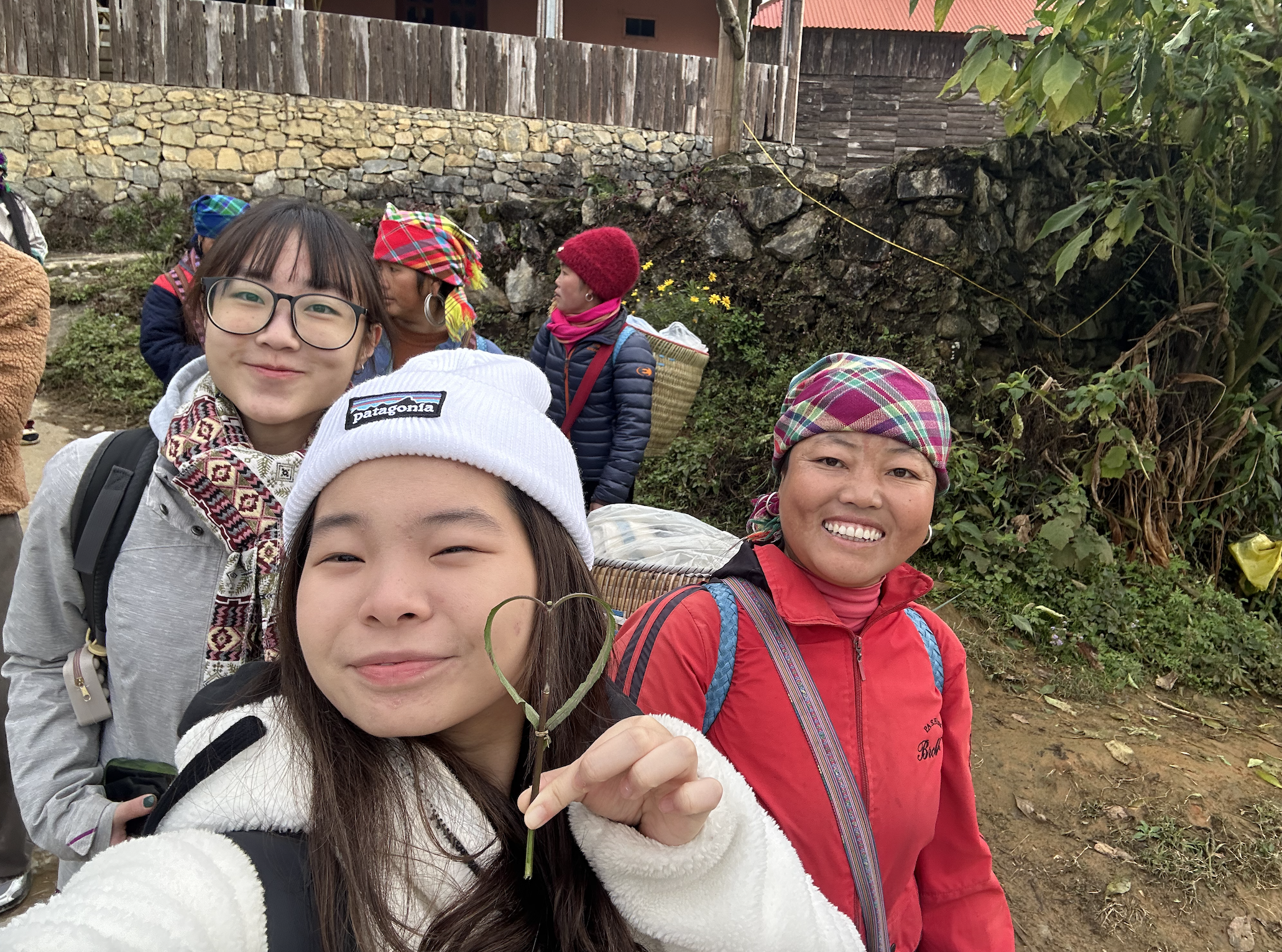
Seven days in Hanoi and Sapa sounds is indeed too short for me to experience the country in-depth, but this trip offered me invaluable reflective questions and friendships.
The trip started with challenges in the volunteer teaching session. The chaotic arrangement left us all speechless and panicked. Having ADHD, autistic and down-syndrome children inside one small room, it was a challenge to us thinking how to deliver our “teaching”. Honestly, the conditions of the children were worse than what I expected. I told myself to be more loving and to see them as every other lovely person in the world. Since then, I calmed down and tried to be flexible about all the arrangements. I would say that set the right tone for the rest of the trip.
Another challenge, or more of a concern, is being the group leader of the only international group on the trip. “Group leader” itself has never been a heavy title as I did not see myself as any better person to “lead”, and I am used to catering people with dietary needs. It was the isolation that I saw between my group and others. Initially, the only interaction between my group and others I saw was phototaking between Oscar and Lasya. Even as a local, just because I was in an “English-speaking” group, it seemed that no one approached to talk to me. Then I realised I had to be more proactive to initiate conversations, and that reminded me of the importance of taking initiatives, especially in interpersonal occasions.
Having that said, it may be the fact that our group was pretty separated, there was a stronger bond within us. For the times when some other groups could be wandering around individually during free time, our group always stuck together and explored the city together. That became our valuable common memory that we still talk about today. We always shared thoughts on the trip, what we experienced and what we reflected on. I am very lucky to have a group that appreciates the art of nature and the little moments in lives. If it is to say most people are tourists, I am confident that my groupmates are all travellers.
The most memorable day was Trek Sapa. We were all amazed by the landscape. More than that, we reflected a lot on the city’s big picture in an international sense. Watching the kids in the village was a reality check. They live such “raw” lives, playing in the dirt without a care in the world. It made us reflect on a difficult line: we want to help the underprivileged, but who are we to say our “modern” way is better? It may be another lesson for us to learn to respect their choice of living in a sub-urban or rural setting rather than imposing our idea of “success” on them. We later came to the conclusion that our job is to let the life choices be known to them, then respect their choice of way of living. “Respecting” does not mean stopping the effort to offer knowledge of the modern way of living.
What struck me most about Vietnam was the silence of the infrastructure but the loudness of the human spirit. On the surface, it looks underdeveloped or “old-fashioned.” But because they don’t have every material thing available at their fingertips, they have each other. I saw neighbors watching each other’s kids and families sitting together outside. That kind of tight-knit bond is something we’ve almost lost in Hong Kong. We live in a concrete forest of high-speed internet and high-end apartments, yet we are strangers to the person living next door.
I felt a strange sense of pride for them. Our tour guide, and everyone we met, had this genuine love for their hometown. It wasn’t a political pride forced by education, but a soul-deep belonging. They know they are still developing, but they are proud of who they are right now. It made me realize that in Hong Kong, the more we know and the more we overthink, the more we judge. We’ve traded our “true pride” and simple happiness for a life of constant criticism and comparison.
I am so looking forward to the next backpacking trip to Taiwan with my group as we were talking about it during another reunion dinner. Round-the-island may be our next chance to develop core memories and learn about the world, to take in knowledge as we feel and talk to people, to convert them into substances that we will carry along in our own lives.
Thank you Oscar, Nicole and all the staff for this inspiring trip.
Winnie Mang
Bachelor of Laws Year 2
Group 5 Leader
On the first day, our initial stop was the Ho Chi Minh Mausoleum and Presidential Palace. Then we visited the Foreign Trade University, where we spent time with the students there, painting our own Nón Lá (Vietnamese Conical Hat). During this workshop, talking with the Vietnamese student and exchanging cultures, backgrounds and perspectives was enlightening. We also visited the Chinese embassy in Vietnam, which was an eye-opener as well. I did not expect the embassy to be such a large place, almost like it was a small town or community, where Chinese diplomats and their immediate families lived and spent their time, with facilities not only for important meetings but also entertainment, like swimming pools, ball courts and childen’s playgrounds. In the evening, the street-food tour with local university students made me further understand some cultural differences, as we talked with them in depth throughout the tour. I had come to realize that almost all of the Vietnamese students I have talked to on this tour has never been to anywhere outside of Vietnam, and it made me appreciate what a privilege it was that I have been on vacation or study tours to so many places, including this trip to Vietnam.
We spent the whole second day of our trip doing the volunteering teaching session, which was of course very meaningful. The day started with a visit to the VVCD center in the morning. The center was in a very small building with very steep stairs and narrow hallways, and could not have fit more than around 15 people inside comfortably at a time. Then we proceeded to the restaurant at which the teaching session was to be held, and there we met the participants, and for our group it was a group of 20-32 year olds with limb impairments affecting their fine and gross motor skills. I felt like I couldn’t fully communicate with them, and not just
because of the language barrier. For the participant I was teaching one-on-one to decorate the red packet and build the clay models of iconic Hong Kong and Vietnamese foods with, although he was trying hard to participate in the activities, I could tell he was not that interested in what we were doing. However, I hope he still had a fun time, bringing home a box of the clay models that we made together.
On the third day, we went on a boat trip to Halong Bay, on which we had an amazing lunch with seafood. The views on the boat trip were also spectacular, where we got to wove through the limestone islands and admire them up close. Kayaking in the Luon Cave of Ha Long Bay was definitely one of the highlights of the trip. Being able to kayak among the caves was a dream come true for me. Not only have I always dreamed of spending time in such a serene place surrounded by nature, the cave also reminded me of the scene where Hiccup first found Toothless from the movie How To Train Your Dragon. The calmness this kayaking journey brought me was immense and it was then that I really started to feel relaxed and immersed myself in the beautiful nature of Vietnam.
The visit to Cat Cat Village on the fourth day also provided us with lovely scenery and a beautiful waterfall. The village was very commercialized, with numerous tourist souvenir shops and restaurants. Then on the fifth day, we had a long trek to Lao Chai and the Ta Van Villages. Along the trek, I had the honour of conversing with some locals, who were walking from their own houses to the villages we were heading to sell their handmade embroidery products. Arriving at the village, I was surprised by how well developed the village was, considering that it was in the middle of the mountains of Sapa. We had a delicious lunch at a restaurant in the village, which was a family operated business. We were also gifted with drinks, and I chose the salted coffee. Paired with a full view of the terraced fields and other parts of the village, the experience was a ten out of ten.
Going up the Fansipan Mountain by csable car on the sixth day was an unforgettable experience. Although I had taken cable cars many times before, they had never been at the same scale that this was, with the Fansipan Mountain being 3143 meters high. We passed through and came out on top of a layer of clouds and the view was spectacular. At night, my groupmates and I explored the area around our hotel in Sapa, checking out the tourist stores and local foods, which were amazing.
On the seventh and last day of the tour, we joined a farm tour and a cooking class, where we cooked with the vegetables harve sted by ourselves. The farm experience was very fun, and a lot of us ate the tomatoes as we picked them along the way. The local farmers were very nice and accomdating. In the temple of literature, we learnt a lot from our tour guide Hugo about a lot of the history of the education in Vietnam, and we even encountered a group of junior high school students takiing their graduation pictures there. It was fascinating to see that we connected on Internet slang, if not on a language level.
This whole trip was very fruitful and rewarding. I felt a lot more relaxed after the trip and prepared to take on another busy semester of studying. I am also very grateful to have met all my groupmates, as they were all part of what made this trip so special. I have definitely learnt and appreciated a lot more about the Vietnamese culture, and will share the passion with my family and friends.
Tess Tong
BEng (BME) Year 1
Group 5
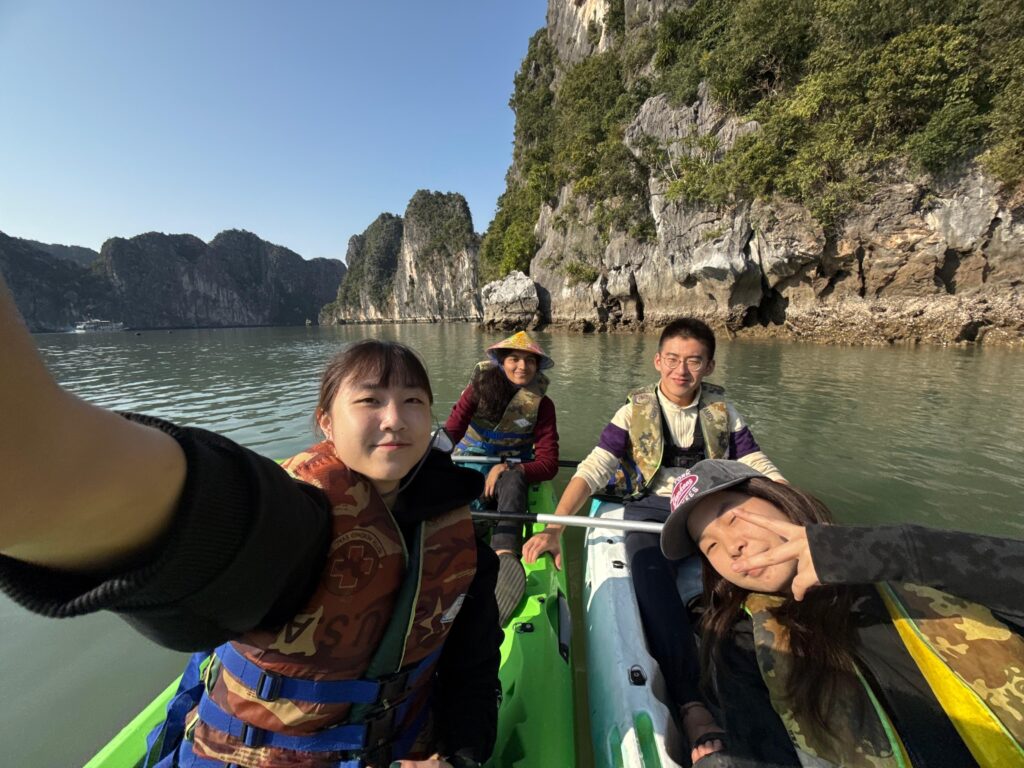
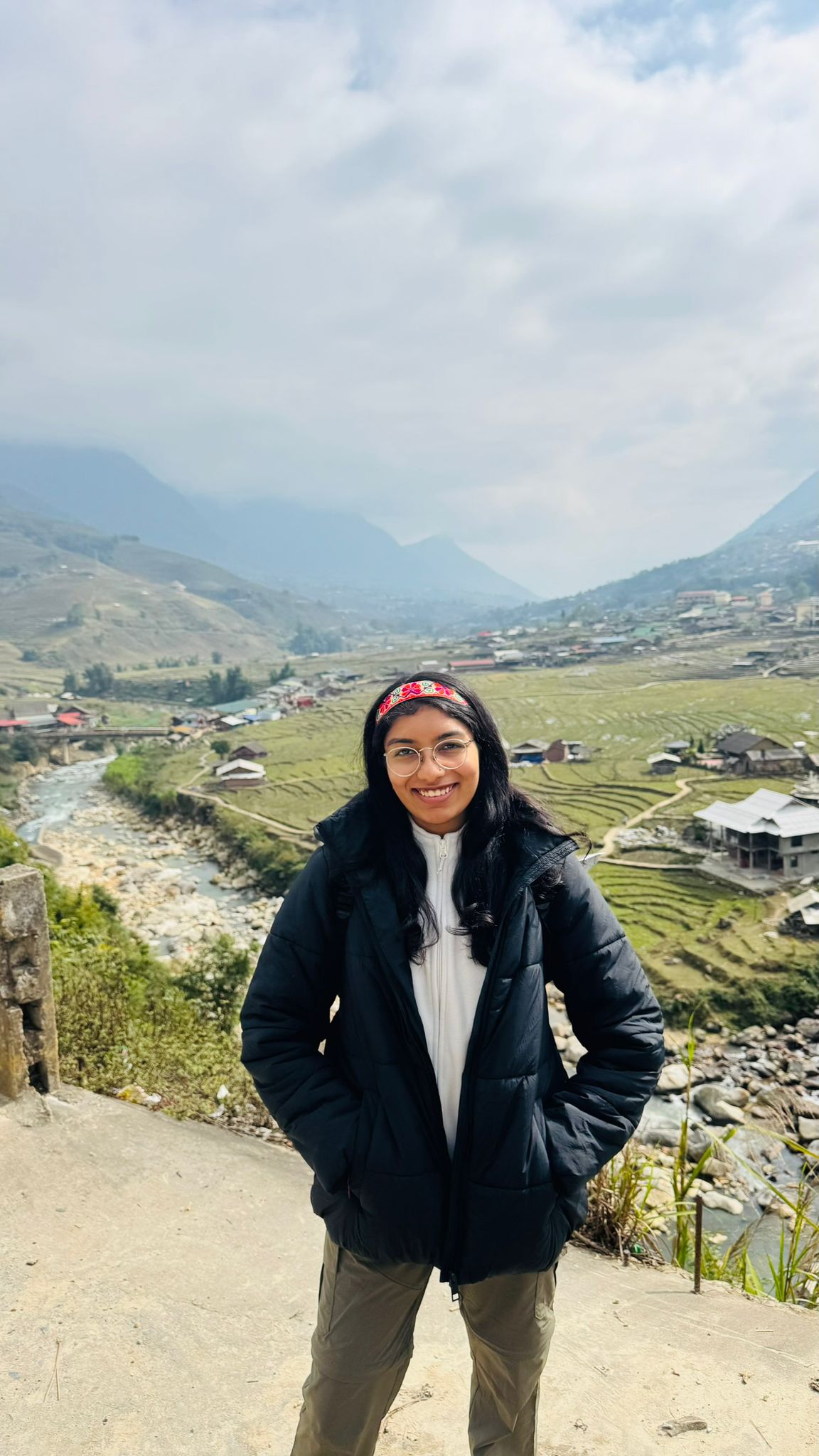
Our week in Vietnam began with the imposing monuments of Hanoi, first we went to the preserved body of Ho Chi Minh and the elegant French-colonial Presidential Palace. These sites taught us about the history of Vietnam and how it is defined by resilience and cultural fusion. My favourite part was the true learning when we moved beyond these symbols to meet Vietnam’s people. Our tour guide Hung was super warm and welcoming and stayed with us throughout the trip.
This is a photo of me with an army man. This is a very memorable and interesting click as I didn’t expect he would let us take a picture while on duty. His kindness gave me a great first impression of the Vietnamese.
Next, we went to the Foreign Trade University and the energy was palpable. Speaking with one of their very friendly students, we glimpsed the ambitions driving Vietnam’s rapid development. Their questions about our lives in Hong Kong mirrored our own curiosity, revealing shared hopes despite different contexts. We played some games and found out that we are actually quite similar. This was a lot of fun and we even painted the Vietnamese hats – which you will see during my trip to Halong Bay!
The theme of connection deepened at the Chinese Embassy, where the Belt and Road Initiative was discussed not as abstract policy, but as a living network of projects and partnerships. It prompted us to consider the impacts of geopolitical and economic strategies. As an Indian, I was quite amazed to see how easily they let us enter the embassy premises and that felt quite awesome!
Heartfelt hospitality, shown by the Hanoikids student guides, became a defining memory. We had dinner across small takeout restaurants in Hanoi. That was the best bahn mi I have ever tasted, it was so good I forgot to take a picture. We also visited ancient churches and enjoyed the old architecture of the city.
The most profound lesson in connection came not in lecture halls, but in a community centre. Our volunteer day with VVCD, working with youth with special educational needs, stripped away all formalities. Without a common language, we communicated through smiles, simple games, and shared gestures. We taught them how to make Hong Kong street food with clay and decorated red packets and they taught us how to make paper flowers. In their patience and joy, we were humbled. I feel like we went to “teach,” but instead learned about unconditional acceptance and the universal need for inclusion. It was the emotional core of my journey. The participants were actually understanding everything and following our instructions pretty well so it was very eye-opening.
Thanks to the trip organisers, Oscar, Nicole and all, we were able to do a bit of sightseeing that day as well! We went to the Hanoi Train Street, where the old-fashioned train passed us while we were sitting just centimetres away. This was super thrilling and I’m so grateful to the organisers for going out of their way and making this experience possible for everyone.
This is also the first place I learnt about ’Ca Phe Muoi’ or salt coffee – which is what heaven tastes like. Initially I was sceptical, but once I tried it here, I had 2 cups every single day. I miss it a lot now that I’m back so I’ve tried making it at home.
The next day, nature provided another kind of lesson. Gliding through the emerald waters of Halong Bay in a cruise surrounded by ancient limestone karsts, was a breathtaking study in scale and time. It was a beautiful
reminder of the world that exists beyond human timelines and urban sprawl. We kayaked through the caves and learnt how to be patient and listen to nature. I also really enjoyed kayaking with my groupmate Rochelle – I wish it lasted longer. We also hiked up a cave, and this was my first time in a cave. I was expecting bats and darkness but this place was actually quite commercialised and was made for tourists. We could see interesting rock formations like dragons and broccoli. That made me think about whether mass tourism hurts wonderful natural places like this one.
The next day, we returned with souvenirs not just of handicrafts from Cat Cat Village, but of perspectives. The urbanised village gave us a chance to experience rural life as we sat on horses, got to see waterfalls and interact with the locals. There were villagers dancing, feeding birds, playing music and setting up a bonfire as well.
The long trek through Lao Chai was a scenic and calming walk. I loved seeing the wild animals on the trek and interacting with the women and children of the villages.
We also were welcomed by a family for lunch. They had super tasty food and very fresh meat (we literally saw live chickens 2 feet away from roasted chickens). I’m very grateful for their hospitality and warmness.
The following day after hours on the bus, the cable car ascent to Fansipan’s peak offered a different vantage point, both literal and metaphorical on Vietnam’s stunning topography. At first the summit was covered in clouds but once we were above, the clouds cleared up and we could see the mountain valleys and the big Buddha more clearly. We also did a traditional Vietnamese dance and played a ball game with the locals.
Our final understandings were tasted and shared on the last day. In a very local setting, cooking traditional dishes from ingredients we had just picked from their garden, exchange became tangible. We made rice paper rolls and salad with the fresh vegetables we picked. Everything tasted amazing and our group grew closer.
We then visited the Temple of Literature, where we saw a lot of students taking graduation photos. We saw a country confidently facing its future while honouring its past, and this was a beautiful sight to watch.
All in all, we learned that development is multi-faceted: economic, diplomatic, communal, and environmental. Most importantly, we learned that beneath the layers of history, policy, and landscape, it is the warmth of human connection that leaves the deepest imprint. Vietnam taught me to look closer, listen more carefully, and always seek the human story within the grand narrative. Thank you all for making this one of the best trips of my life so far.
Tvesha Kumar
BEng (Computer Engineering) Year 4
Group 5
Firstly, I would like to thank Professor Oscar and Cedars for giving me the opportunity to travel to Hanoi/Sapa from HKU. This is definitely the best experience I have ever had during my entire 3 year journey in HKU.
Throughout the trip, I personally reflected on many things. In this reflection, I will first highlight the things done day-to-day and will reflect on each activity. It was my first solo-trip (because I always travel to countries with my parents), and this was also the first trip from the university. My parents encouraged me to go here. The time I got the confirmation email, I was over the moon. The 3 things I have reflected from this trip is to embrace the uncertainty ‘wabi sabi’, going with the flow, and continuing to make each moment special by making others smile (bringing happiness) — I love making others smile, and capturing joyful/memorable moments as a photographer.
On day 1, it was a busy morning and all of us gathered at the airport during the early morning (5.30am), and I grouped up with Luna and Amy – went together to the airport. I learned quite a lot of vocab and popular cultural elements/food from Luna. It was a chaotic morning, and after reaching the Hanoi Airport, we met our tour guide ‘Hung’, despite the language barrier, he made sure we understood each and every element of Vietnam based on the places we travelled planned from our itinerary, which I felt truly grateful for.
We first went to the Ho Chi Minh Mausoleum (Presidential palace). I was totally amused by the different colours and combinations of architecture (French + macau + china + vietnam) styled buildings. It was quite interesting to learn how French colonial architecture reflects Vietnam’s historical transformations and cultural fusion. Few old painted buildings demonstrated how Vietnam focuses on historical significance, and the beautiful infrastructure just blew my mind away, I was always ready with a camera while walking on the streets.
Apart from taking photos, I did realise the differences between Hong Kong and Vietnam – Hong Kong having a more fast-paced environment with more people on the streets/roads, but Vietnam having very few people on the streets but heavy transportation usage (motor-bikes), I really wanted to ride those, It gave me a more India vibe to me. Vietnam would have been environmentally excellent if those motorbikes had been replaced by electric vehicles.
Later, I saw the military guard nearby the palace, I was considering whether I could take a pic with him, I asked Luna to help me translate, and he replied her with a smile, all of us a sudden, started taking pics with the military guard. I thanked by saying ‘Gam on’, I saw his happiness when we all respected him for his duty.
Later, after that, we had lunch at a chinese-styled setting, I loved engaging with my fellow groupmates and students from other groups – a great conversation and comparison among different food types (Hong Kong vs Vietnam vs India). Later, we went to the Foreign Trade University (FTU), I learned about the university life in Vietnam from the Vietnamese local at FTU, It was so nice learning about their university.
The Hanoi Kids activity was very interesting and I truly enjoyed it. (The best Bah Mi everrr), and we also met a girl called Ngon, we had a deep engaging conversation on vietnamese culture during the new year, I explained her similarities between local chinese new year. Many terms in vietnamese sounded similar to Chinese, which was actually surprising. It broadened my horizon in perspective of cultural exchange and language. Due to the heavy traffic, I was also ensuring that all my groupmates were crossing the road safely, we formed a train-like queue when we were crossing the roads, so that all of us stayed together. I really loved the idea of how the Vietnam students took the approach to learn English, It was a great experience as they learned English from us, and we learned Vietnamese from them.
The best dessert in Vietnam…..
I noticed that changes are required for us to grow, there are few things I tried on this trip which I never tried before, and now I am in true love with them.
On Day 2, the bus journeys day-to-day improved and strengthened the bonding between me and my groupmates, it was full with happiness and laughter, I was labelled as the jewel of the group from my groupmates, because I always took the chance to make them laugh and bring happiness on their faces, sometimes too much, and that’s when we couldn’t stop our laugh. All I focused on was to make each and every minute full with happiness…
Day 2 was definitely a lesson to learn for me, although I initially always wake up at 4am (even during exams), I was 15 mins late to the bus gathering because of missing the lift and helping my groupmate to collect something – This was on day 2, where we had to prepare for the SEN teaching session. Later, I realised the ending is more important than the beginning of any action, and I decided to never be late. Then, that word ‘Wabi Sabi’ really grabbed my attention – about appreciating the natural cycles of growth, decay, and finding tranquility in flaws – Making mistakes are stepping stones to learning and success. The teaching at the Sentosa restaurant with SEN, improved my adaptability skills, and our focus was to make sure that the SEN students were happy and satisfied with our teaching — At first, we were all nervous on whether we could manage the class, but the communications and the good coordination between us made everything possible in an efficient manner. Each of individually have unique strengths, together we are all united as a perfect team. I realised, despite labelling the students as SEN, they have a hidden talent/inner world within themselves – each and everyone. For instance, the SEN girl ‘Ngon’ in our team had excellent public speaking skills despite being a bit shy, I could see how confident she suddenly became, when we all started clapping and encouraging her — I think nowadays the potential of SEN students should be further encouraged and understood despite from being hidden worldwide. Our activity on decorating red pockets was quite interesting to the students, and we also utilised technology to break down the language barrier, it was quite effective. As a whole, we successfully completed the class, whether all the students enjoyed it, noticed by the cheerful smiles on their faces.
Train street — First time trying the salted-coffee, I was thinking whether to try it —) Just went for it –) It was the best coffee I have ever had, that salt made the taste intensely amazing. I later asked Hung the reason that salted coffee is so popular in vietnam or why coffee in general is so popular in vietnam…
Wandering off to the Train street, with full excitement to see the train at a very close angle – it was mt first time trying salted coffee, and I truly felt in love with it. I was considering whether to try it or not, and after trying it — It was amazing. I realised how important it was not to stick with one thing all the time – Life is more about exploring new things and trying new things, filling our gallery with different photos and memories which don’t repeat. This, brings me back to my favourite quote ‘Living life with no excuses’.
Day 3 was the best day for me. I returned with a constant improvement, and I came the earliest and the first one to the Bus gathering point, my strong commitment/dedication skills helped me. This was the day to Halong bay. I was so worried about kayaking, because I have never done kayaking before, and listening to other students’ experience of falling into the water even worsened my fear even though I know swimming, cause sometimes I have a fear for deep water— ‘Should I try it or not?’But then I thought, I would definitely regret not trying this after the trip, so I went with my groupmate who has done kayaking a lot before, she was boasting about my confidence before the ride. But, once I got on the boat, everything changed, a new perception, a new experience, a new change, as we paddled, I was observing the sounds of nature. All of a sudden, I totally forgot what I was scared of. Instead of trying to go everywhere in a hassle and rush. Me and Tess were into listening to the sounds of nature, we tried shouting and there was an echo inside the cave.
Sounds of birds, water waves sound from the paddling. Apart from a photographer perspective, I got more connected to nature by observation and listening. The sounds of nature are truly magical.
I did also get obsessed with photo-taking, and I think this was the first time I was so obsessed with photo-taking, maybe it’s because it’s my first solo-trip. The reason why I was so much into photos, firstly is because I want to capture each and every moment, the happy ones and
the funniest ones. I wanted to display what I did the entire trip as a movie to my parents. Photography is more on making moments and capturing them, not only simply taking a photo.
We had a great vegetarian meal, and I got so truly supported and felt gratitude for my group, Oscar, and Nicole. Because, the waitress initially assigned me to sit on another table as I am pure vegetarian — At first, I was a bit disappointed that I had to sit separately. But then, when the staff requested, and my groupmates were calling me to come there — I felt so strong and happy, went back to the table to make everyone smile and laugh.
The 6 hour bus ride on Day 4, built a stronger connection between me and my groupmates, we got to know about each other more deeply, and understood each other’s personality. Also, this was the most memorable day — the landscape, rural life, tranquillity, nature, all just gave me a feeling to escape from the tall-buildings, and go back to a more rural lifestyle.
After trekking, we arrived at the cat cat village, I loved the aesthetics there, It was a mix of cultural representation (black Hmoung culture) and modernisation. People were dancing cheerfully — which made me (my inner dancer) to go to join them. The music, the lights, the people — everything there seemed so magical and peaceful. This was the first time where I sat on a horse – later, I felt pity seeing the horses standing up all day and feeling sleepy, therefore I did not spend that much time sitting on the horse (only 4-5 mins)— after all animals are also living beings, they deserve rest too. Sitting on the horse, with the background gave me a warrior feeling, this reminded me of movies where they sit on horses during a war. The waterfalls, beautiful singing by birds, the background flute music — calmed my inner self and brought my mind to a tranquil state, I could stay there for more than 2 hours. In fact, the entire Vietnam trip reminded me of India, and I got deeply connected with it.
My next favourite was definitely the long trekking. I was a but concerned because I am not that used to trekking, and I haven’t been for a 5-6 hours trekking before. After seeing the mindblowing view, I just started imagining that I was on the rice-terrace from the trekking spot. The cold breeze, the scenic greenery, rice terraces, and the aesthetic landscape, It felt like I landed on a different planet. I then immediately took off my selfie stick, got ready to capture the beauty of nature to show it to my parents once I arrived in HK. However, I felt like the photos were not enough to capture the beauty of that scene, but definitely my eyes/mind were — thus I decided to plan a trip with my parents to Sapa, with a well-planned itinerary. Nowadays, it’s more difficult to admire an agricultural scenic view, because of industrialisation and globalisation etc.. This is definitely something not only environmentalists, but we all have to preserve and take action for sustainable development. Trekking to Lao chai was the most-loved, I enjoyed talking to the locals on the way, on of the ladies made a cute heart-shaped wand out of a simple wood she picked directly instantaneously. I admired her craft skills, where she was so skilled and expertised at making handicrafts. If they had a social media page/media support, this would have helped them a lot, to gain publicity for their craft and popularity. The conversation with them, the laughter with the groupmates, a cup of salted coffee in hand, the breathtaking view, the cold breeze — this is surely defined as fulfillment. Apart from simply talking to them, I asked them more about their daily routine there, and the weather conditions in Vietnam — because I was curious to know whether it’ll snow in Fansipan (Since I have never seen snow in my life). The local restaurant was so welcoming, traditional, and pleasing. After mesmerising the view, I was first attracted to the hand grinder, this was something my grandmother (long-generation gap) used to make powdered turmeric and spices for curries. But I have never seen it directly, so my curiosity got turned to try that immediately – I immediately tried it, I realised how difficult it was, the energy to twist the stone requires so much energy. This reminded me of the hard work my ancestors kept in, for daily cooking. A fun fact is that, this hand stone grinder enhances the taste and flavour of the food when powdered, but if grinded directly using an electric mixer, the hidden magical element is missing which enhances the flavour. I later researched on the reason behind — Manual grinding generates less heat than high-speed electric grinding. This slower, gentler process helps preserve the natural flavors, aromas, vitamins, and minerals in grains, herbs, or coffee beans that might otherwise be degraded by heat.Apart from enhancing the flavour of food, it is also beneficial in terms of medical aspect — This movement of grinding, improves ergonomics and helps improve and strengthen joint mobility. As a medical student, this fascinated my interest a lot. Tools and equipment used in the past was so health-oriented which are constantly being replaced now by tools that can increase the risk of health issues. From my perspective, I really felt like addressing this gap.
Moreover, the village’s slow-living vibe, all natural and organic ingredients, with breathtaking views attracted my attention, I got into a different world. I started imagining how it would feel during seasonal changes throughout the year, for example, the magical essence of the grass during raining, and the cold breeze/fog during winters.. It can be described by words.
All our groupmates and staff – Had so much fun playing with the chickens, feeding them the corn churned by the hand grinder, and just playing around – with so much laughter and joy. We later went out to do some shopping, I realised Hanoi and Sapa were so different in architecture, clothing, and speciality – both locations had unique speciality and differences.
Later, we spent time shopping and wandering off at the streets, we tried a lot of traditional vietnamese food and snacks.
In this whole trip itinerary, I was so excited for this: Going to Mount Fansipan. It was my most favourite among all. First, I got so attracted to the locals dancing and playing a game called Nem Pao, I later did research on the significance of the game — It is a festival celebrated to bring joy and community spirit to the Tet season, also it was about to improve friendships and bondings between the locals. Me and my groupmates quickly got onto the stage, and tried hard to throw the ball into the loop — It was fun, yet challenging. I loved the background music, it reminded me of the background music nearby Big Buddha in Hong Kong. The overall was so tranquil and peaceful, we took this chance to take a lot of pics with the locals, and this also strengthened the bonding among groupmates. Also, I did not regret that we did not see snow, because the fog, the breeze and the breathtaking view was even better than snow – Life brings us so many new surprises which are better than the originally planned situations. I saw a cable car with 30 seats for the first time. I really wanted to know how the Vietnamese found Mount Fansipan and built the cable car there – their discovery of that mountain was magnificent and ambitious — Life is all about exploring the new. I was so curious to know about this, after research, I found that it was known through some local ethnic groups, which later became a popular destination spot – So incredible. At first, as the cable car was moving higher, it was all foggy and nothing could be seen – Then, all of a sudden, the sun-rays became stronger, an unexpected scene, a beautiful imaginary, an amazing dream, we were all able to witness the reality that we were above the clouds, this was way different to the view taking the aeroplane. I totally felt in love with this view, it’s like snow. This gave me a vibe and feeling that I was sky-diving which has always been in my bucket list – as I said, Life is full of surprises – together we embrace and fulfill our inner mind and heart. It was extremely cold after reached the Fansipan Mountain, but the view didn’t remind me that it’s terribly cold — every flaws were ignored after mesmering that breath-taking panoramic view. Though I was initially scared and nervous – I took the challenge and went to the Fansipan Summit – at 3143 feet. I could feel my heart beat raising 160-170 beats per minute, and my knees started getting tired – I didn’t think about the outcome, but only focused on the effort and went with the flow, I stopped at few pinpoints while reaching the top, I video-called my parents to show them the breathtaking view. I told them I was hiking and climbing up so high for the first time – They were initially worried, but I convinced them. After reaching the summit, I totally forgot about my heart-beat and knee sprain — the view distracted me. I also met Reacker on the way (at the starting point)– I encouraged her that we can do it — that anything is possible. Even the word ‘impossible’ has ‘ I am possible’. Now, my interest towards hiking and sports have been enhanced, I realised that I should do more sports to train myself even more. But, this definitely is a wonderful experience to me, I’ll never forget in my entire life. This day also made my phone storage full, which I filled with photos, videos and moments of joy and satisfaction.
On the departure day, the local vegetables collected from the farm was so good, and refreshing. It reminded me of the fields we have in India. The local cooking was something I was also concerned about, being a vegetarian. But everyone was so cooperative and considerate – I felt thankful for all the people around me. Now, I mastered how to make that rice rolls, I will definitely make it for my parents and friends — I also realised how healthy it was, afterall health is wealth. The chef confidently shared his tips and tricks to master Vietnamese cooking, we had a fun conversation with him. This was actually my first-time cooking in such a big group of students, everything went so smooth. We appreciated and enjoyed the flavours of Vietnamese food. Being a mythology lover and religiously devotional, I was so much interested into how the local students prayed the god for better academic grades, and took a prestigious statue of a person who completed phD as an inspiration – it was so stunned and I started praying as well, as I not only believe in Buddhism, hinduism and daoism. These are quite interesting to me, I loved how the temple is being preserved as the history and the significance of the temple is admired by on-going generations. I deeply listened to Hung’s explanation on the history of the temple — being a temple lover. The trip was so fruitful.
We also felt thankful to Tour guide ‘Hung’ who proudly and always cheerfully introduced each and every element of Vietnam, ensuring that we did not miss any detail. Our group had a plan to thank him, and therefore we bought a postcard near the literature temple. Surprisingly, he loves fine art. Time flies, and out trip came to an end, but gave us all recognitions and an intention for new beginnings and daily routine. This trip, isn’t something I will only write in my scrapbook, but also take out memories from it and store them in my heart.
This trip also inspired me to go on backpacking with my group, and will continue to explore more on the true capabilities of myself with constant growth and knowledge, and exploring the world.
Once again, thank you CEDARs 🙂
Lasya Priya Donthula
Bachelor of Science (Major in Biochemistry and Minor in Nutritional Science Year 4)
Group 5
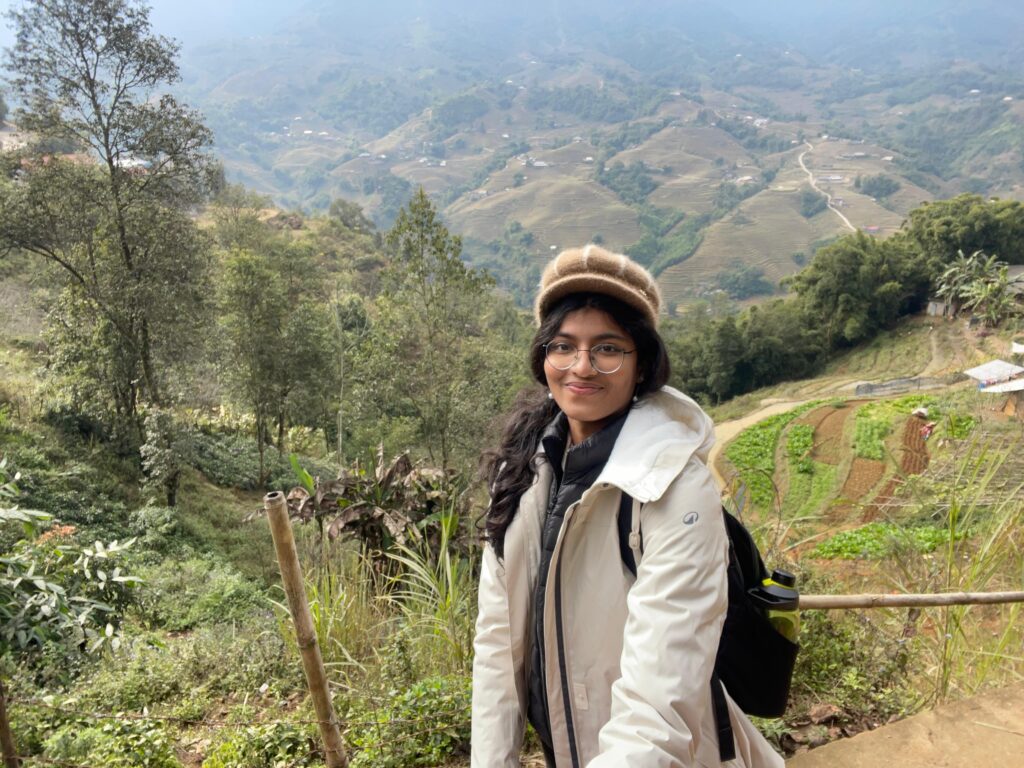
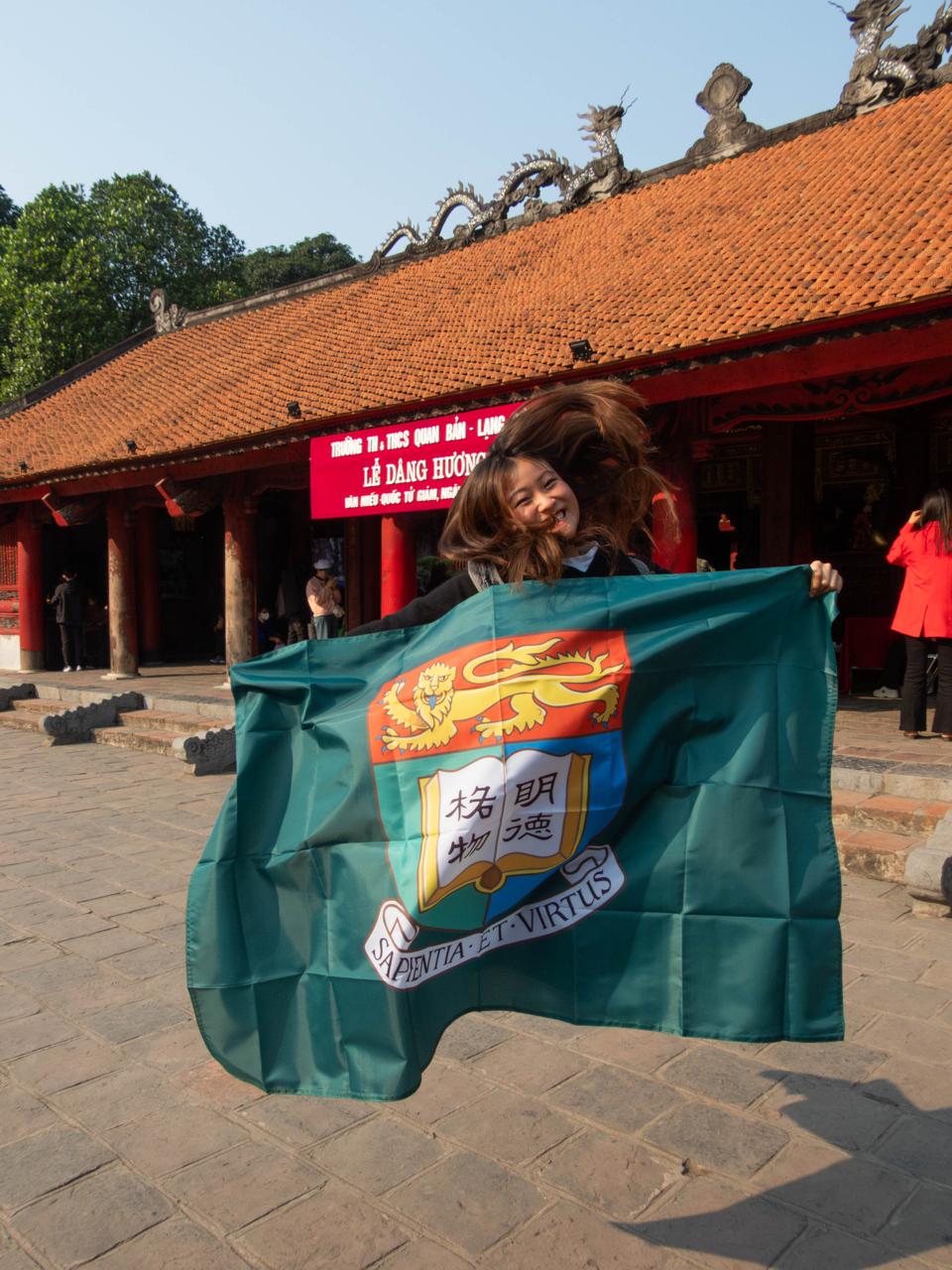
“Wabi-Sabi ” ~ Oscar Ng ( 2026)
As the first light broke through the morning haze at the Hong Kong International Airport, the whole CEDARS vietnam group ensemble groggily at 5:30AM, discordant to our usual rhythm, unaware that this early start would set the tone for the disciplined early mornings that defined our trip in Vietnam. Those 7 or 8 a.m. awakenings soon became familiar, almost meditative in their regularity.
Landing in Hanoi, the Old Quarter immediately pulled me in with the aliveness, chaoticness, and how thickly layered the city brimmed with history. French colonial buildings stood alongside bustling streets, elegant balconies heavy with bougainvillea, faded facades carrying echoes of another era. We walked through Ba Dinh Square, its quiet expanse heavy with the weight of the past, and had intellectual exchanges and discussions with the Consulate Generals at the Chinese Embassy, a stark reminder of the ongoing relationship building of China and Vietnam relations majorly through the Belt and Road initiative. That afternoon brought one of the trip’s quiet highlights: crafting non la hats with students from FTU University. Working side by side, shaping bamboo frames and stretching silk, we connected without many words, simple, focused creativity that felt grounding.
As evening fell, we joined a group of young locals for dinner under bright neon lights, bringing me back to Hong Kong’s bustling streets almost. The banh mi arrived impossibly crisp, banh xeo unfolded with its savory filling eaten in a small but remarkable diner, and bowls of che offered the sweet comfort of vietnam.
The second day shifted to volunteer work, a reminder of how quickly plans can change and how much flexibility that requires as we were shunned into a room filled with noises, laughter and cries. Surrounded by children and adults with special needs and extra care, language barriers felt daunting at first, but we found ways across them.
We were paired with various groups of children and adults with special educational needs, including those living with autism or ADHD. The hardest truth to accept was realising how consistently these individuals face discrimination and stigma from society, often ignored, shunned, or misunderstood simply because of their biological differences. Yet what I truly appreciate about Vietnam is the genuine willingness of people here to recognise and nurture this group, even with limited resources. It doesn’t take grand efforts to connect and communicate with them; sometimes all it requires is a familiar phrase and a small commitment to learn how to communicate effectively with those who struggle to express what they want to say.
This experience pushed me to step far outside my comfort zone and reach out to people who seem difficult to talk to. For years, I felt ashamed that I lacked the courage to speak with my grandma, who has dementia and can no longer form complete sentences. It always felt too hard to see her in her state of condition. But that night, I took the first small step to call her and ask the same gentle question I had asked the child I was paired with earlier that day: “你今日食咗飯未呀?婆婆 ~ Have you eaten yet?” with a soft smile on my face. Even though I couldn’t see her reaction clearly or hear a proper reply, her little nod told me everything.
Deep in my heart, I could feel how much she wanted to connect with me too and in that moment, all my pent-up emotions came rushing back. It really doesn’t take moving mountains to reach someone; love and care are universal, and they can be shared through the simplest gestures of kindness and patience just as I did with the child earlier that day. Their quiet strength and adaptability stayed with me, quietly exposing some of my own assumptions and limits.
I stood on Train Street and felt my pulse jump the moment the train appeared. I didn’t just see it pass inches from doorways and laundry lines; I felt something tighten in my chest. How do people wake up every day next to that kind of danger and still call it home? I wondered if
I’ve grown so used to buffered, predictable risk in Hong Kong that I’ve forgotten what raw coexistence really looks like. I left feeling unsettled in a good way, like I’d been reminded that life doesn’t always give us the distance we think we need.
At St. Joseph’s Cathedral that night I didn’t pray or take photos. I just stood under those spires and let the silence press in. For a few minutes I asked myself why stillness feels so unfamiliar lately. Why does quiet sometimes make me restless instead of calm? I didn’t find an answer, but I stayed longer than I planned, breathing slower than I have in months.
Kayaking in Halong Bay with Tvesha, I kept catching myself staring up at those limestone walls and thinking: I am so small. Not in a crushing way, but in a releasing way. Every time the paddle dipped and the water rippled out, I felt another knot of anxiety loosen. I realized I spend most days trying to control things that can’t really be controlled. Out there, surrounded by something so much older and bigger than my worries, I finally let go for a while. Inside the caves I touched the damp rock and wondered how many people had stood exactly where I was, feeling exactly this small awe. I came out carrying a quiet promise to myself: remember this feeling when life starts feeling too big again.
Cat Cat Village broke my heart a little. I loved the mist curling around the houses, the indigo cloth drying like dark prayers, the terraces carved so patiently into the hills. But I also saw the souvenir stalls creeping in, the smiles that felt practiced for cameras. I asked myself: am I part of the problem just by being here? Am I helping preserve this place or helping wear it down? The question sat heavy until the dance started. When I joined in clumsy, laughing, no idea what the steps meant, I stopped thinking. For those minutes I wasn’t analyzing or judging; I was just moving with people who didn’t need me to explain myself. I realized connection doesn’t always require deep understanding. Sometimes rhythm is enough.
In Sapa the air felt like it was washing through me. I walked those golden terraces and listened to our Hmong guides speak about their land the way someone might speak about a living family member. I felt envious in a gentle way. Envious of that rootedness, that sense of belonging to a place across generations. I wondered how much of my own identity is tied to movement instead of staying. The braised pork at lunch tasted faintly of Hong Kong comfort food, and for a second I missed home and felt grateful for it at the same time. Small contradictions like that started to feel less like conflict and more like richness.
On Fansipan I stood in the clouds and for once, my mind didn’t race ahead or replay the past. I just existed up there. I asked myself what I’d been chasing all this time, why calm always feels like something I have to earn instead of something I can simply allow. The vastness didn’t make my problems disappear, but it shrank them. They looked manageable from up there. I carried that perspective down the mountain like a secret I didn’t want to lose.
Saying goodbye to Hung, our tourguide, hurt more than I expected as he walked through us each day with such generous passion and love for his job to show others what Vietman meant to him. I thanked him and meant it, but what I really wanted to say was: thank you for showing me what steady kindness looks like. Thank you for making space for me to feel small and still be okay. Leaving Vietnam felt like leaving pieces of myself behind, the version of me that danced without self-consciousness, the version that let silence last, the version that remembered how fragile and beautiful ordinary life can be.
Reading Goscha on those long bus rides layered everything. I’d look up from the page at rice fields or motorbikes or kids waving, and feel the past and present touching. I started wondering how much of who I am is shaped by histories I never lived through and how much freedom I have to choose what I carry forward.
Vietnam didn’t give me answers. It gave me better questions. It made me want to live with less armor, to give more freely, to stay awake to the small miracles and the quiet costs of the places I pass through. Most of all, it reminded me that I’m still changing — and that’s not something to fear.
To my chay group 5: gudda brutha.
This trip and everyone there was there for every version of me on that trip. I’m grateful beyond words and can’t wait to backpack with my group through Taiwan this coming summer!
Rochelle Lui
BSc ( Food and Nutritional Sciences )Year 3
Group 5
I am a person who has always yearned to explore and eager to see the world. However, due to family circumstances and studies my footsteps have been limited to China. In the past 6 or 7 years of secondary school I’ve only visited selective cities in mainland China and only once overseas to Tokyo. My world was opened when I flew to Norway in April 2025 after my IB exams with 6 of my friends, spending 17 days there. It showed me what was possible for my age, and how fun it is to explore the world alone.
In all of my previous travelling experiences I’ve always been with my family, and have always been forced to take up the role of the eldest brother to help my parents manage my siblings during trips. The extra responsibilities held me back from being able to enjoy the joy of vacation. Not to mention, all the previous trips have been planned by parents, who only likes to visit touristy destinations focusing on taking photos, making every trip extremely shallow and feels like 走馬看花.
When I was in Norway, my friends and I lived in many hostels in different cities and really took steps to get out of our comfort zones by talking to and making friends with strangers. I tried to do the same in this Vietnam Study Tour, I took advantage of the Hanoi Kids food tour, Trade University exchange, homestay, farm tour and cooking sessions to get to know the locals better and introduce depth into my travels, making it a true 深度遊. So the first thing that I really appreciate about this trip is the many opportunities it provided me to make genuine human connections. I remember chatting and laughing with the student from Trade University when I was colouring the non la, exchanging cultural backgrounds and talking about our different hobbies. We even talked about having girlfriends and I was cracking up so much. Or during the EZ cooking session at the end, where Rochelle and I went up to the head chef and asked about his cooking recipes. We managed to get the recipe for making the spring roll fish sauce and pork in bun cha from him; I loved how passionate he was to share about his own food culture, and I could tell he was proud of his Vietnamese heritage. The same can be said for our beloved guide Hung, he was one of the reasons why this trip felt special. Just listening to him talking about Vietnam makes me happy to be there, not to mention our countless small talks about Vietnamese food, local snacks, life and family. These genuine human interactions made the trip very memorable and showed me human hospitality and love.
Another thing that I gained from this trip is self awareness — being aware of how privileged I am to be born in Hong Kong into a healthy family with decent background, being able to attend a prestigious high school and then now study in HKU. We are blind to the abundance of resources made available to us without comparison to others. When I was in Vietnam, everyone I asked told me that they’ve either never stepped foot outside of their country, or simply have never travelled outside of Hanoi at all. Ironically, I was just complaining about the lack of travelling at the start of my reflection. This just goes to show how good we have it and how easy and comfortable our lives are. Another example, you may remember me bringing this up during my debrief presentation, which is a child no older than 7 or 8, sitting on the sidewalk in Sapa at 1130 at night, in nothing but a down jacket, jeans that are too short and a pair of slippers. He was sat on a small plastic stool, he flipped a brick on the street and put his feet on it, his head periodically dipping every few seconds as he struggled to stay awake whilst waiting for his mother who was eating street food with other local mothers at a nearby food stall. Another instance that really made an impression was the children I saw during our long hikes to villages in Sapa. The children had to be younger than 5 years old, yet they were out on the streets with minimal clothing selling souvenirs to tourists. The only English phrase they know is “10 thousand, buy for me?” no doubt learned from their parents with the sole purpose of making sales to foreigners. Upon seeing all this and having reflected about my own childhood, all the so-called ‘sadness’ that I’ve experienced are inconsequential compared to the things that Vietnamese children go through. The second thing the trip has taught me is humbleness and gratefulness for my background. It also serves as a reminder for me to give back to the people in need around me more often, as I have been blessed with an abundance of resources and opportunities in this life.
Following the previous point, it led me to think: how come poverty, disarray and poor living conditions are so prominent in a country with millions of tourists annually, who bring in tons of money? When I was hearing Hung talk about a Vietnamese millionaire who owns a whole island during our bus ride to Halong Bay, it was as if he was describing an idol that everyone should look up to. But when I saw the luxurious island, with a grand mansion built on top and a private ship parked beside its docks, all I could see were inequalities between the upper and lower class people in society. On one side is the luxurious island of the mega-rich, and the other are the dirty, cramped streets of Vietnam. The lower class people seem oblivious to the lower living standards that they are subjected to, as well as the inaction of the government to change the situation. During my entire trip, I have not seen a single rubbish bin on the street, not a single policeman and have only seen an ambulance once. I don’t live in Vietnam so I can’t say for sure, but I imagine a country that lacks basic infrastructure and is infested by corruption. I think this trip really opened my eyes to the needs of people around me, I don’t think I can ever be a tourist again, but rather to be a traveller.
Lastly, thanks to everyone who worked hard behind the scenes to make this possible. I feel incredibly lucky and privileged to have been able to join this trip. Looking forward to the next time I’ll be seeing the world with CEDARS!!!!
Valentin Shen
BSc (Intensive major in Ecology and Biodiversity) Year 1
Group 5